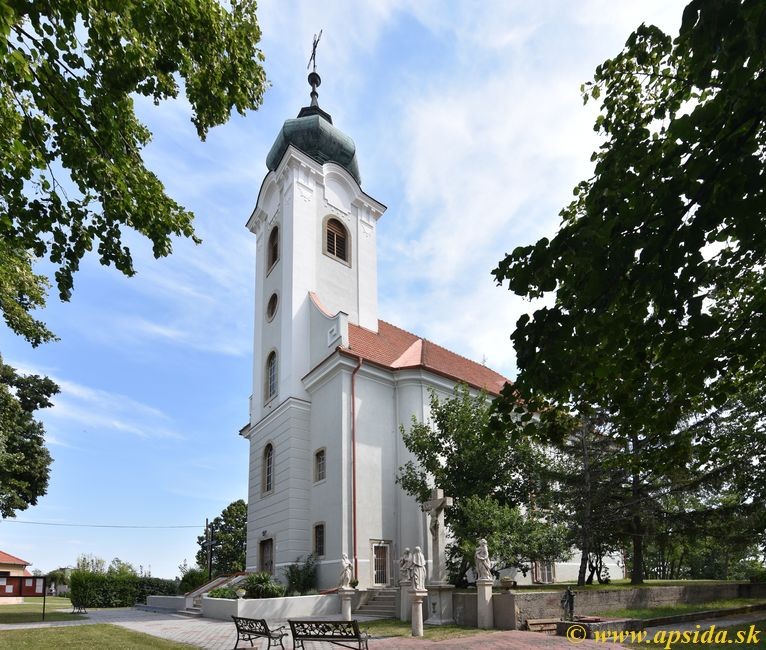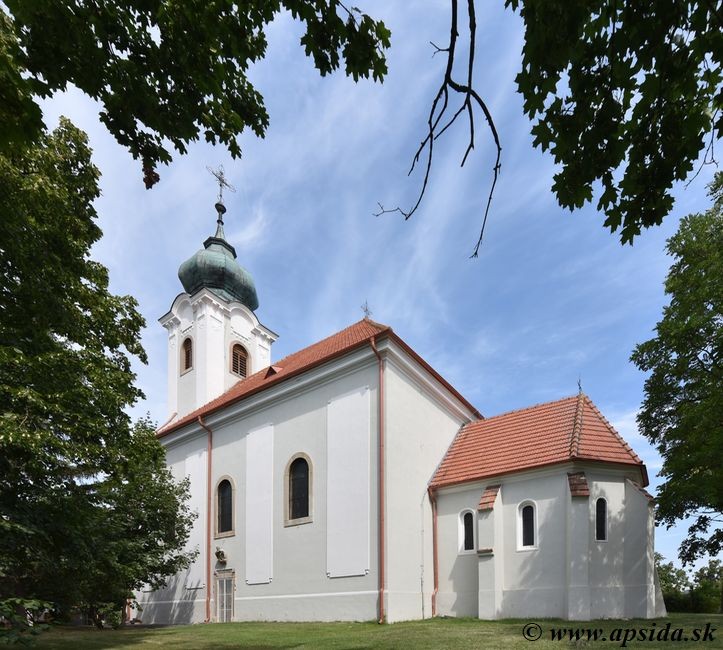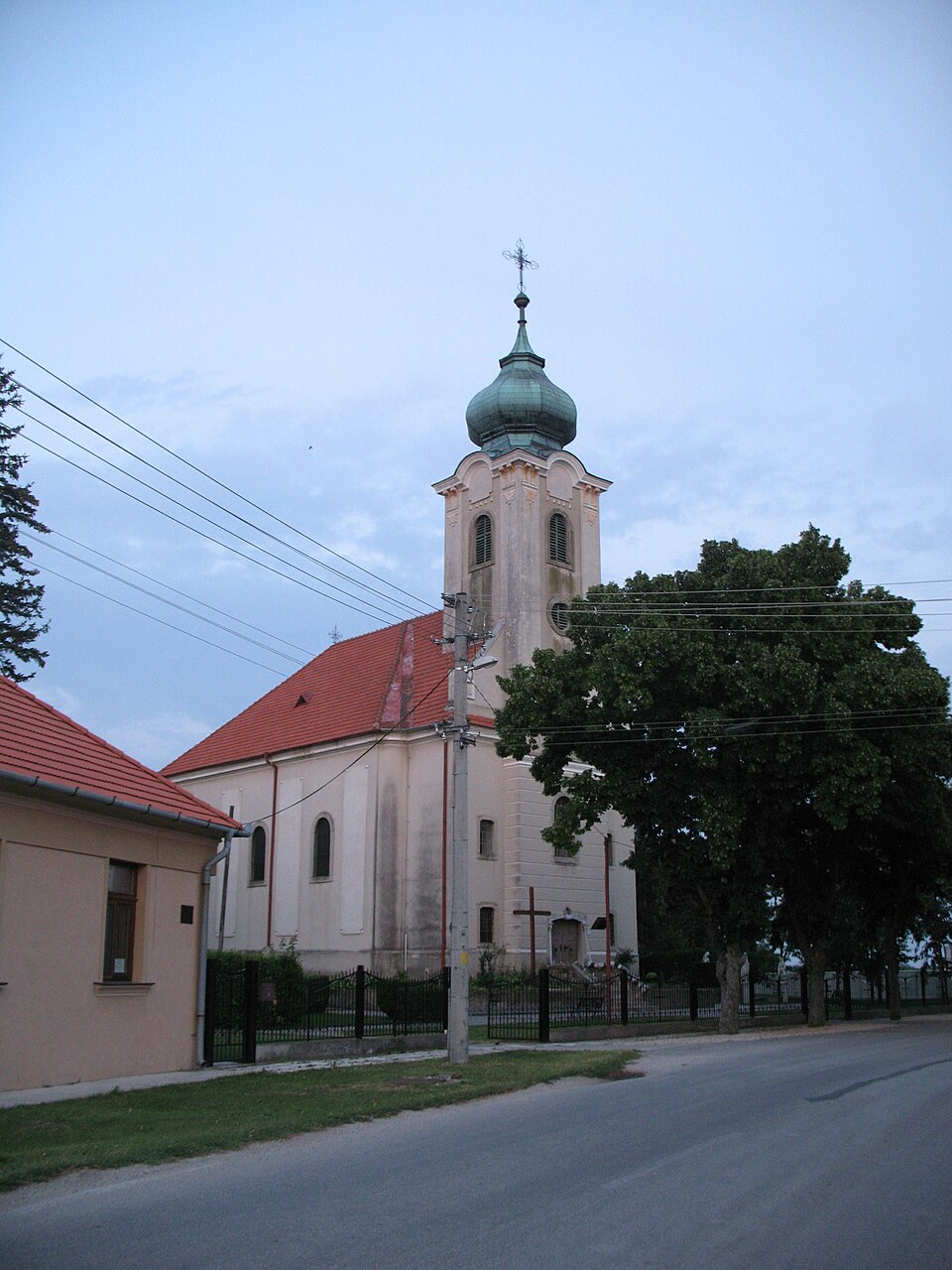



The origins of the Church of St. Peter and Paul most likely date back to the 14th century, although little remains today to recall its medieval beginnings. The original character was largely covered by an extensive reconstruction in the early Classical style during the last third of the 18th century.
The church, with its polygonal presbytery, stands on a gentle elevation at the edge of the village. Originally, it stood in the village of Svätý Peter (St. Peter), which later merged with Eliášovce. In the settlement named after the church’s dedication, a parish already existed in 1331, along with a Chapel of St. Peter. By 1340, the Church of St. Peter is already mentioned in records.
Between 1770–1773 and again in 1780, the church underwent major reconstruction in the early Classical style, during which it was enlarged. The façades were completely redesigned, including the windows and entrances.
Today, the Gothic phase is mainly evidenced by the building’s orientation and the polygonal shape of the presbytery, which is disproportionately small compared to the nave.
Inside, a late Gothic stone pastophorium and the epitaph of Mátyás Ilešházi from 1510 have been preserved. The main altar also incorporates an originally Gothic statue of the Madonna from 1458. In the courtyard of the parish office next to the church, there is a stone basin of a Gothic polygonal (octagonal) baptismal font.
Galéria