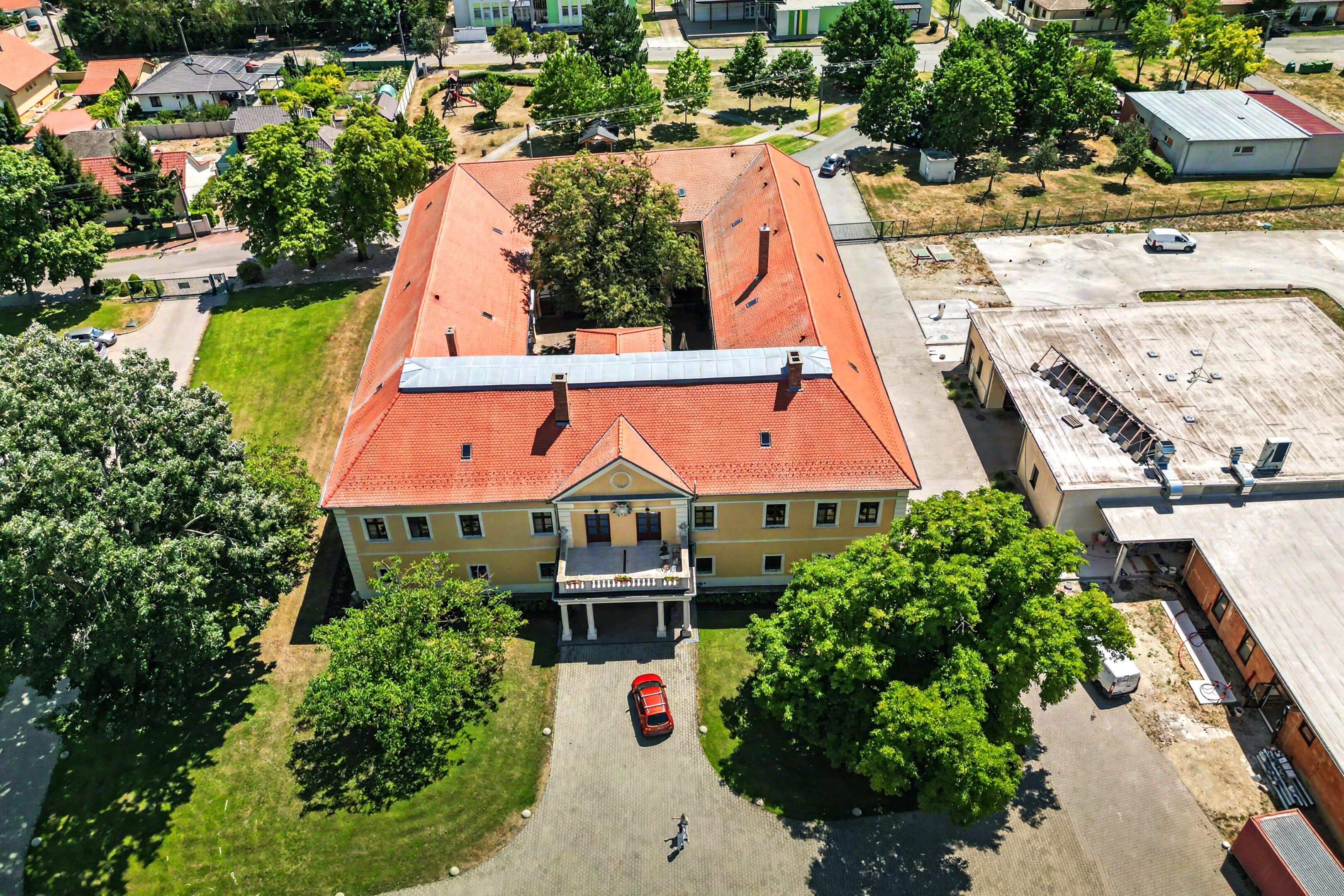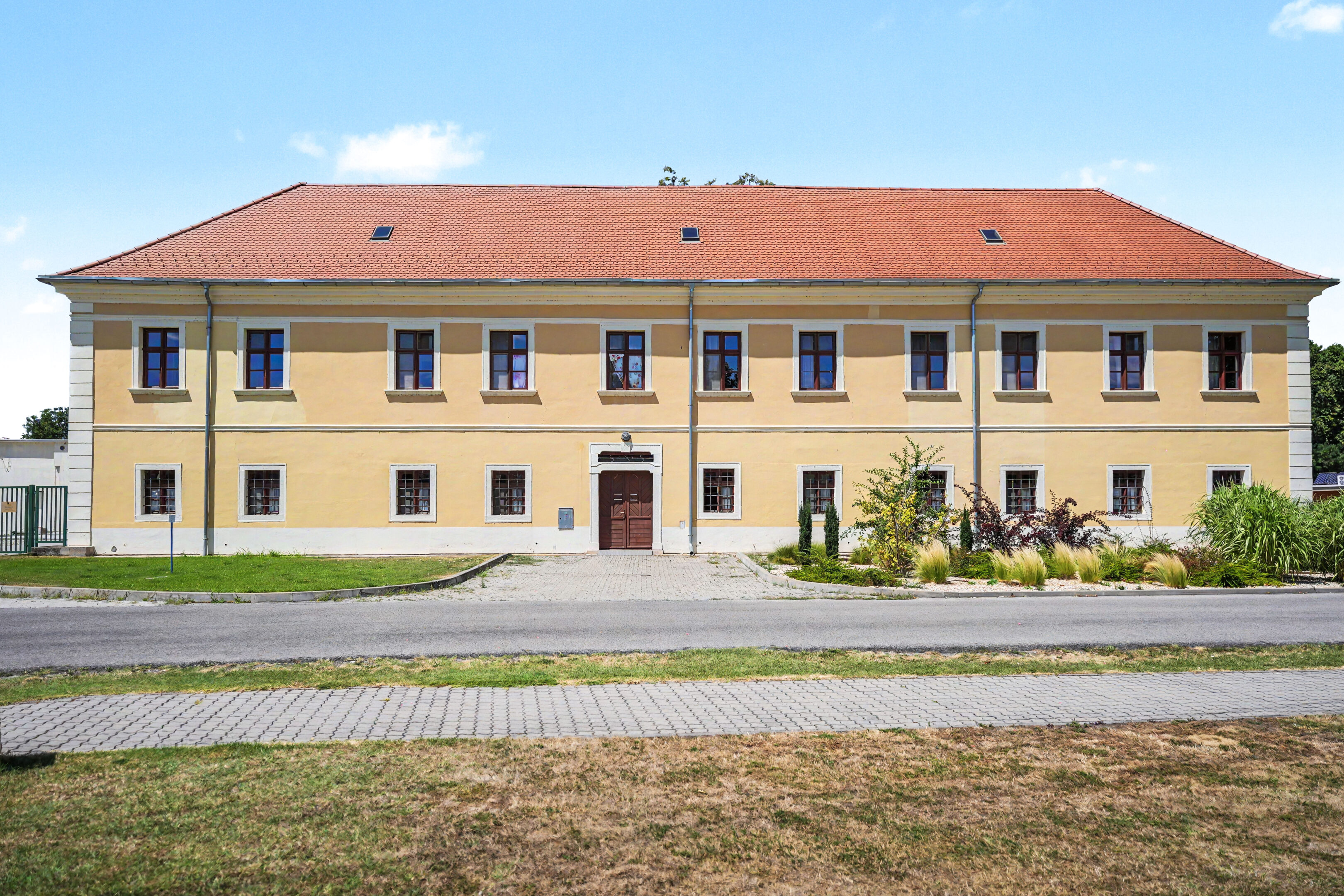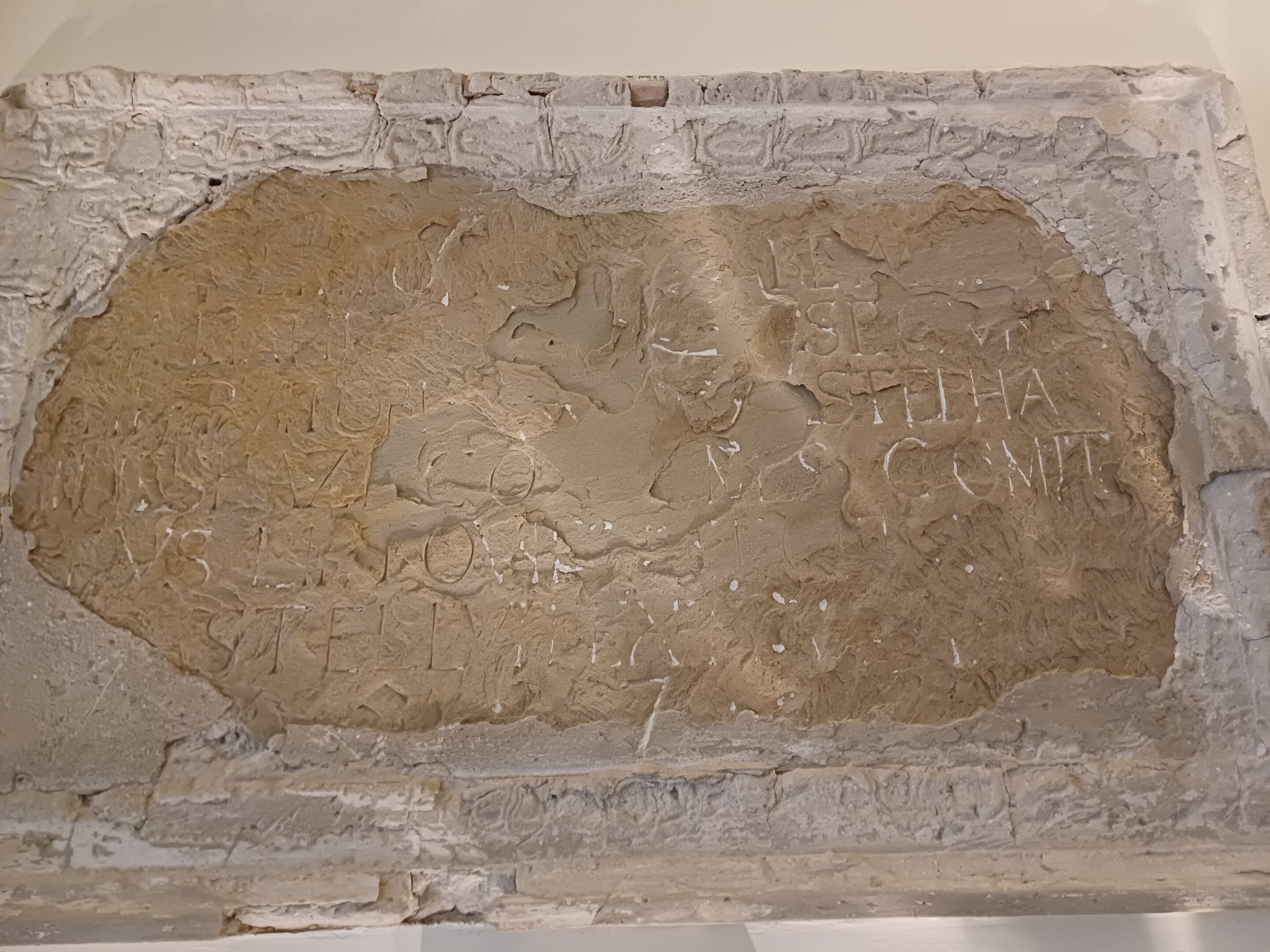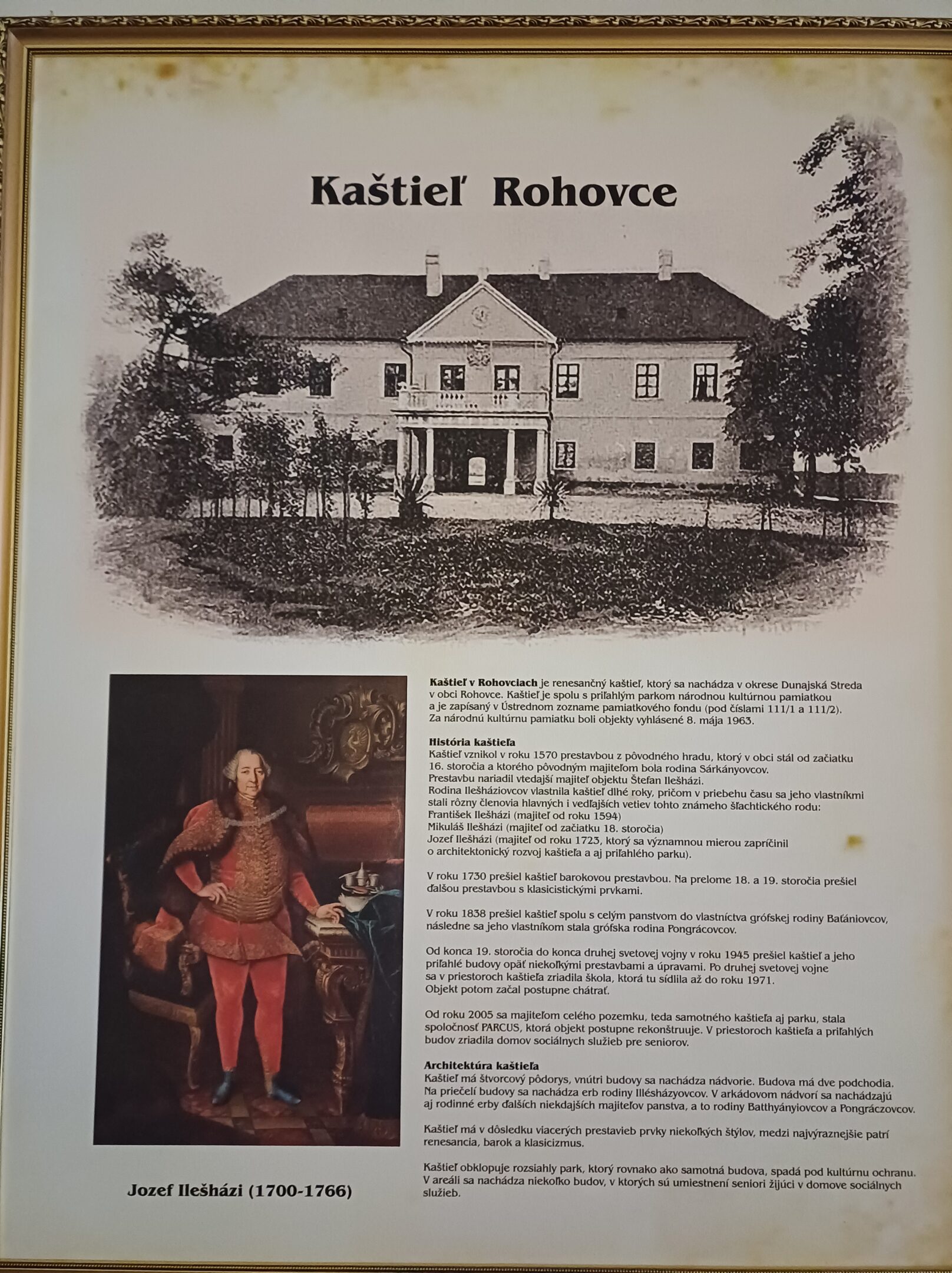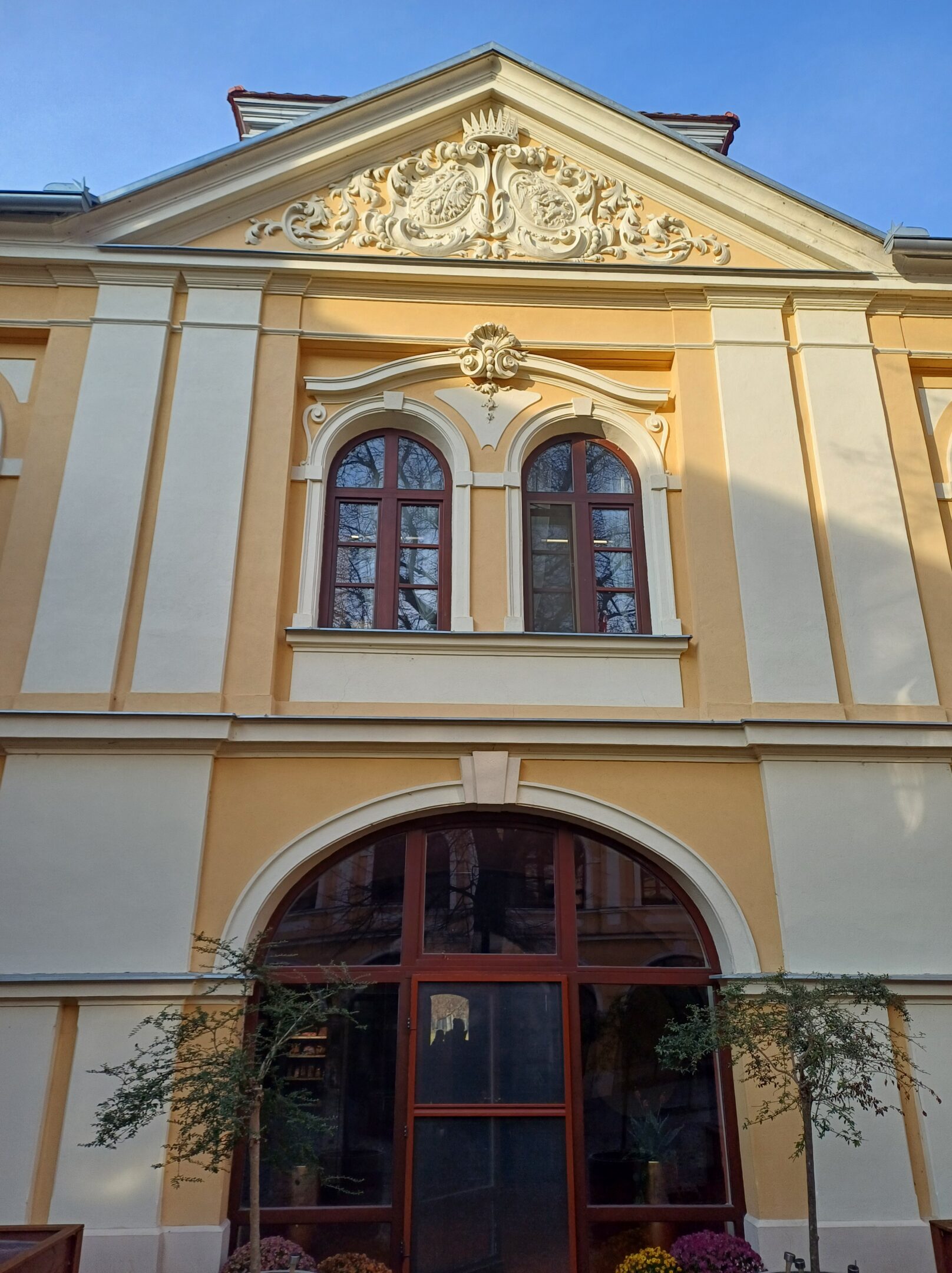


In the center of the village, surrounded by an extensive park, stands an impressive quadrangular manor house. As noble families succeeded one another throughout the settlement’s history, the appearance of the building evolved as well. In the 15th century, the Sárkány counts built a residence protected by water moats. One of the prominent figures of the family was Ambrus (Ambrose) Sárkány, who served as an envoy for King Louis II. In 1521, Count Ambrus hosted Louis II and his wife, Mary of Habsburg, at the manor.
In 1570, the Illésházy family built a Renaissance castle on the site of the former water fortress. The noble family, possessing vast estates, kept their extensive portrait gallery at the Nagyszarva manor, featuring portraits of nearly all their family members as well as prominent members of the period’s elite. Part of their legacy can be visited today in the halls of Trenčín Castle (the Trenčín estate was long owned by the Illésházy family).
Following the death of István Illésházy, the manor house passed first into the possession of the Batthyány family and later the Pongrácz family. Subsequent historical periods enriched the building with Baroque and Neoclassical elements. The last owners of the castle were the Pongrácz family. Pál (Paul) Pongrácz established a model farm at the estate, focused on high-quality crops and livestock breeding. In the turbulent times following World War II, the count’s family was forced to leave their home; the manor was looted, and the building gradually fell into disrepair. Initially, a school operated within its walls, and later it was used as a warehouse. During that time, a vibrant community life flourished in the vast ancient park surrounding the castle: celebrations and balls were organized, and young mothers walked with their children beneath the shade of the trees. Following extensive reconstruction work, the manor house now functions as a senior care residence.
The historical park in Rohovce—known locally as the Pheasant Garden (Bažantia záhrada)—covers an area of 12.81 hectares surrounding the Renaissance manor house. It was declared a protected area with Level 4 protection status in 1982. During the 1970s and 1980s, an open-air stage was built in the park, becoming a popular venue for various festivities and cultural events. A dendrological survey of the historical park conducted in 2006 documented over 3,000 trees.
Galéria