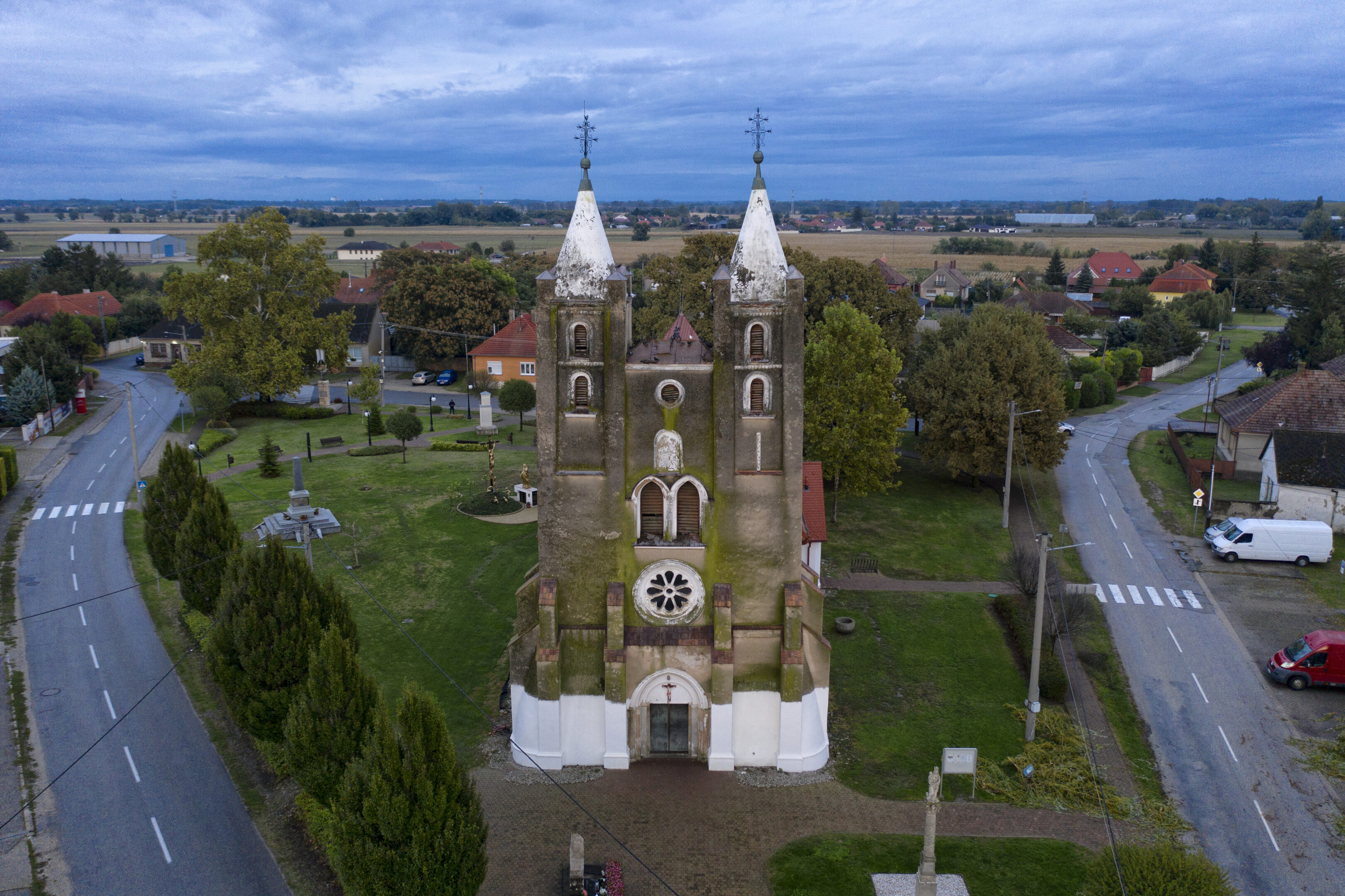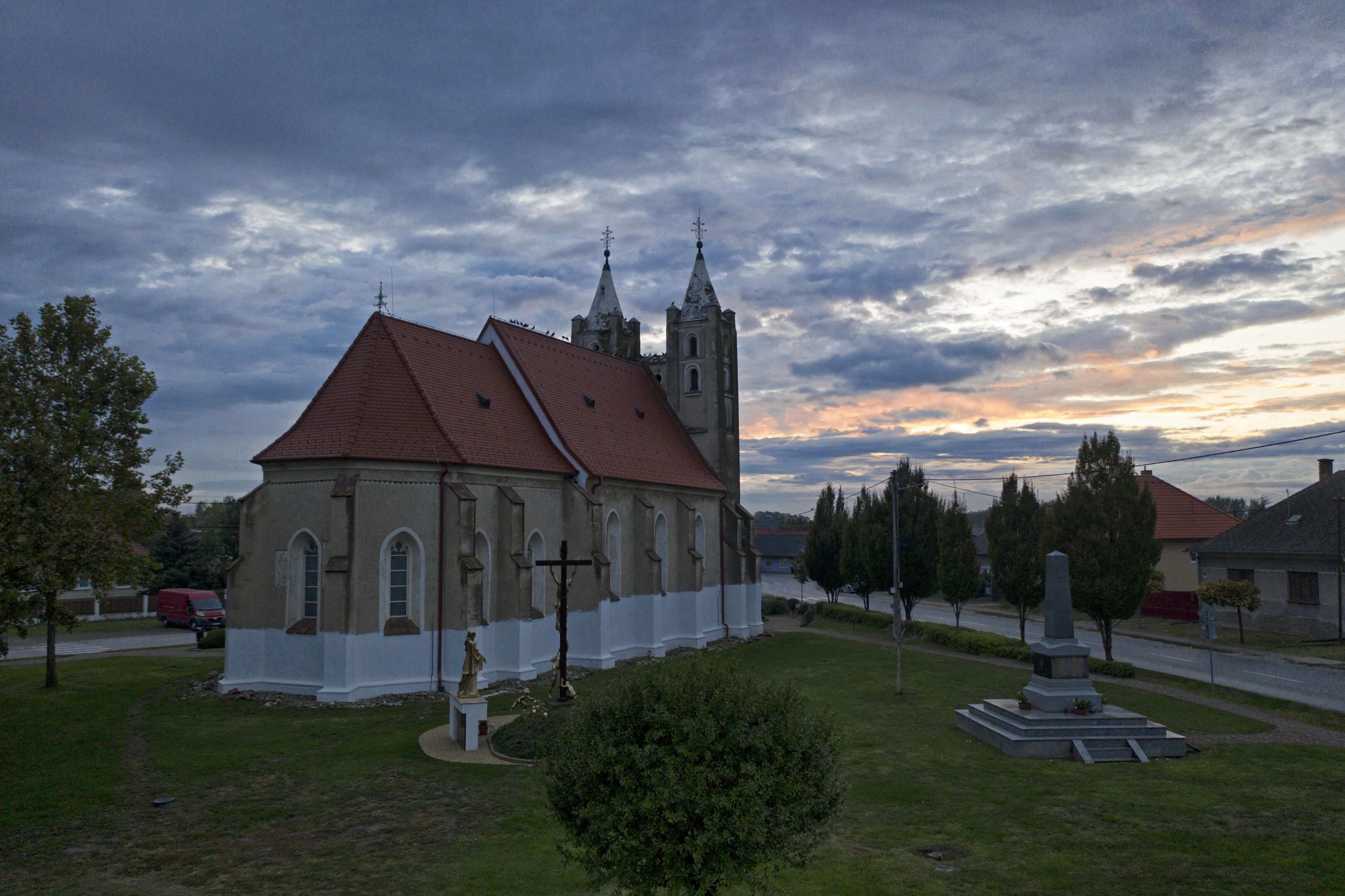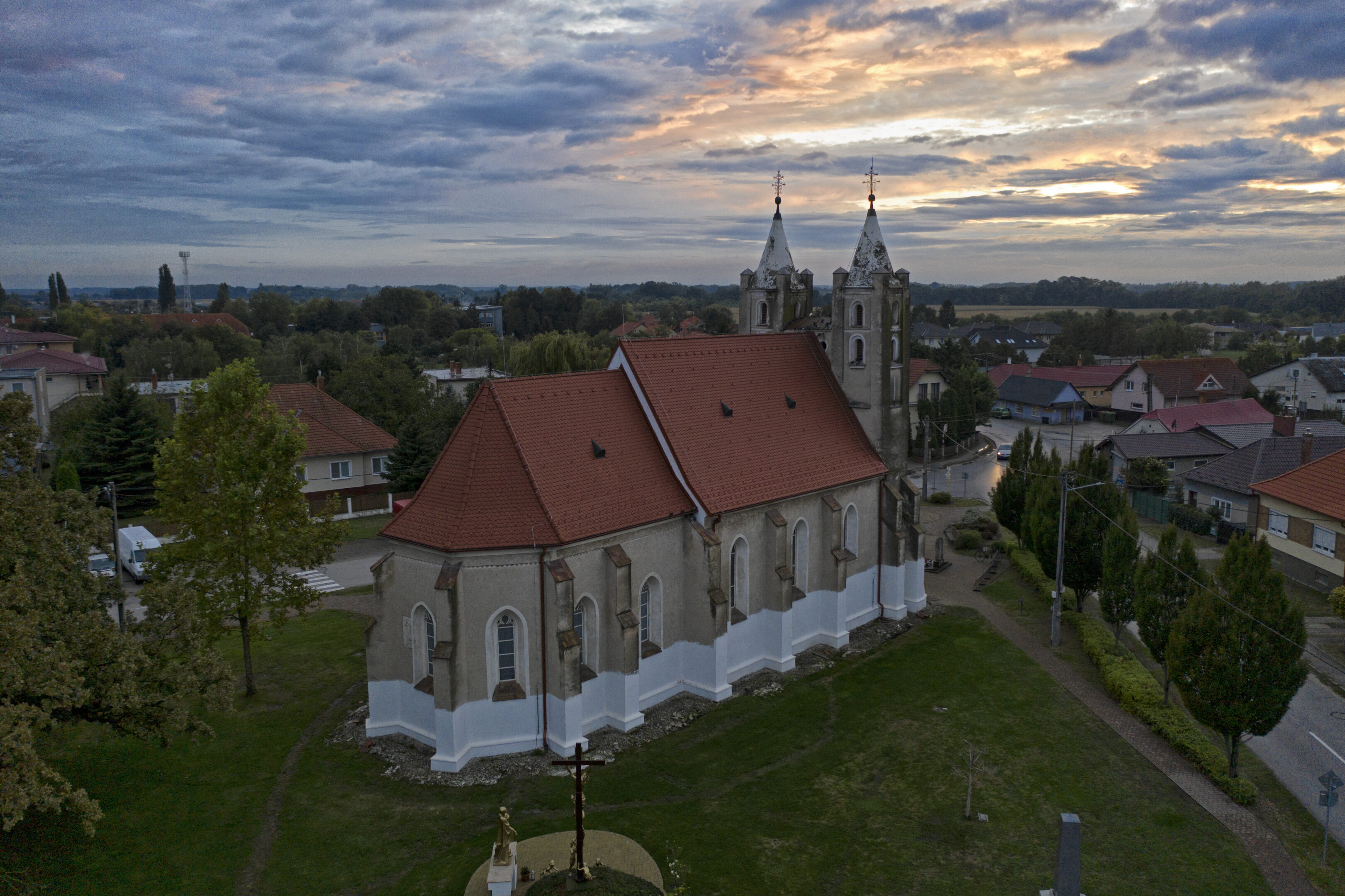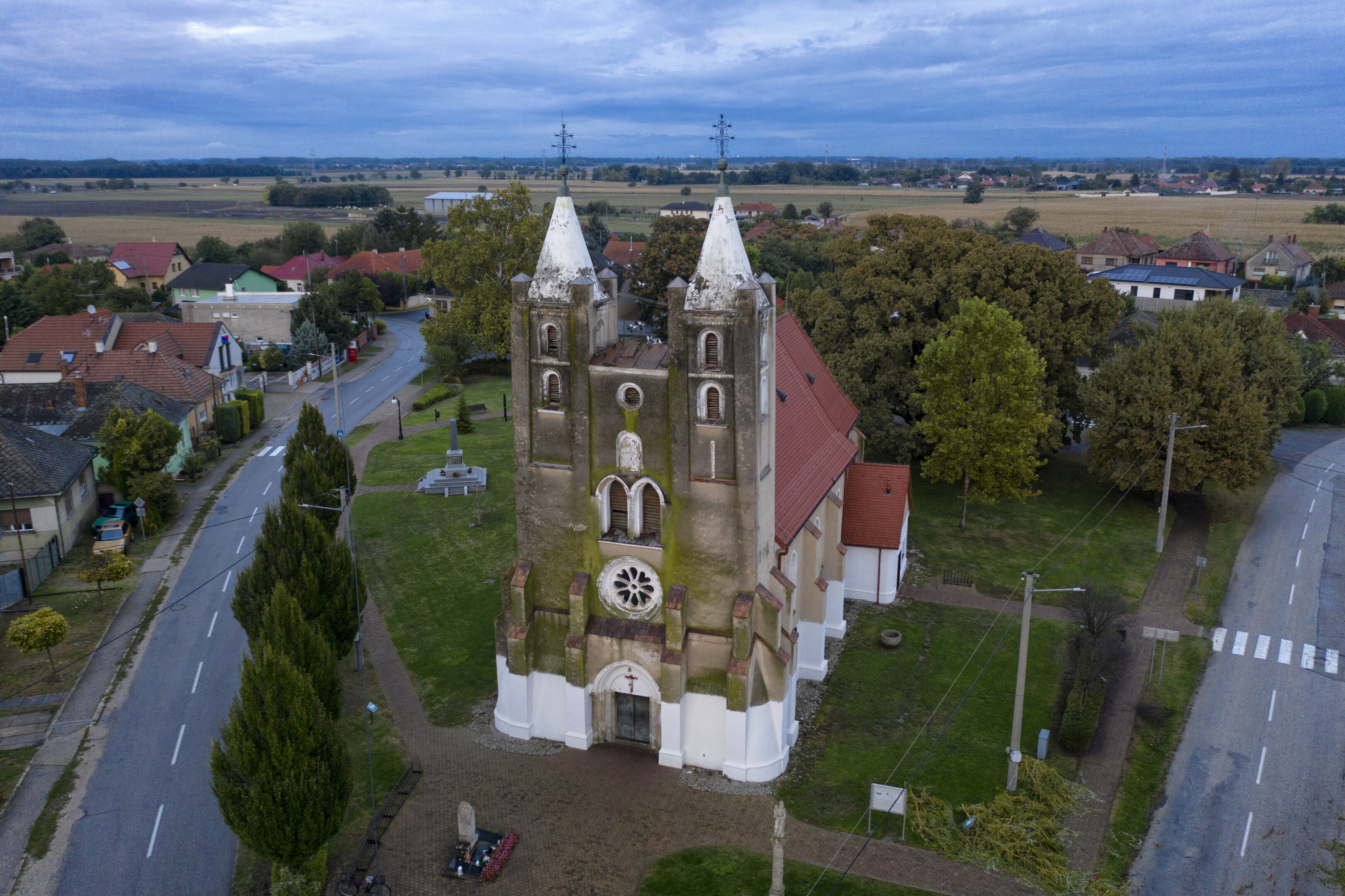



The first written mention of the church dedicated to Saints Peter and Paul dates back to 1253.
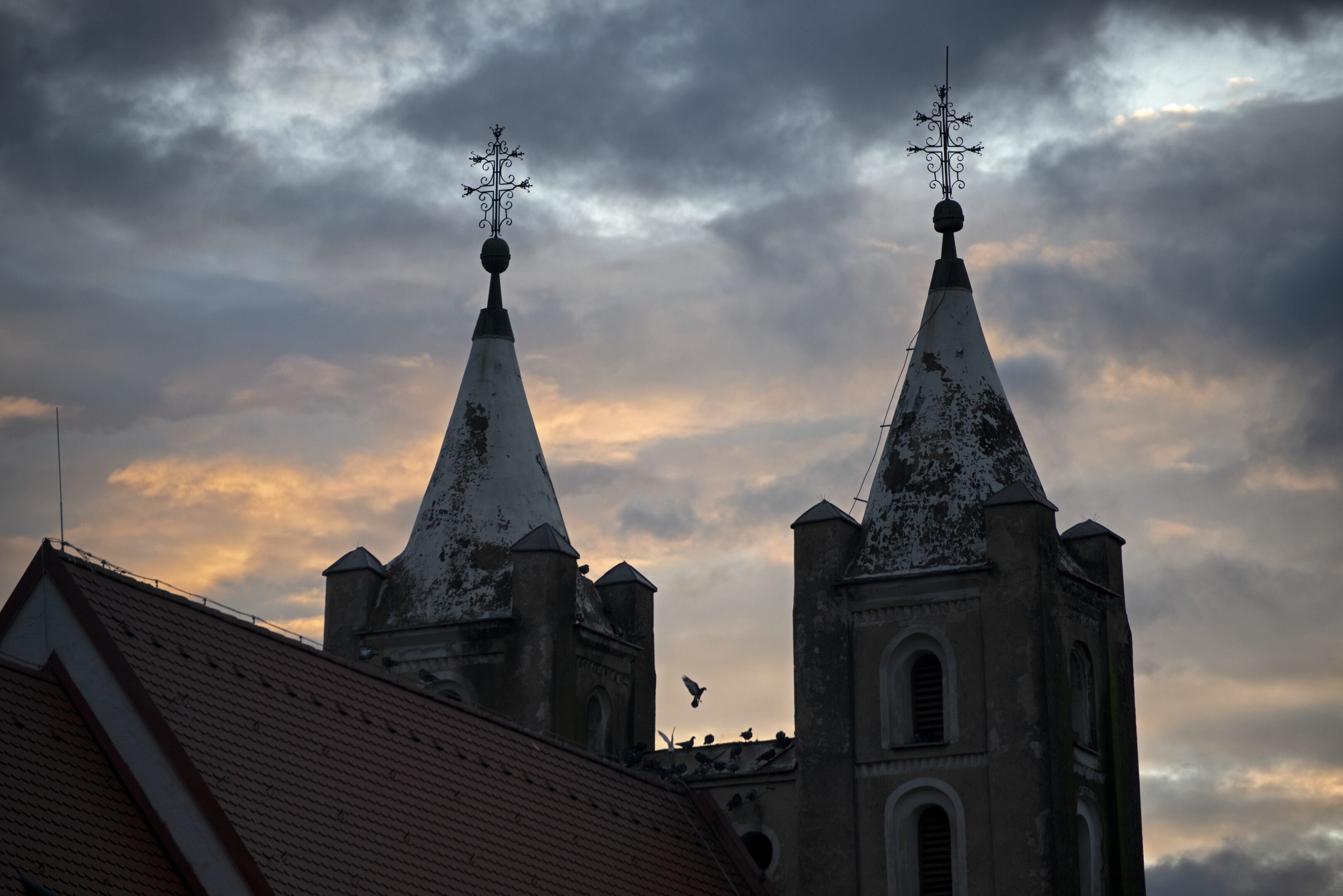
The twin-towered Romanesque church was most likely built in the mid-13th century on the site of an earlier church, as fragments of older foundations were discovered during reconstruction works. The church retained its original Romanesque appearance—a single-nave structure with a polygonal sanctuary on the eastern side and two square towers on the western side—even during later Gothic reconstruction. Romanesque features are especially preserved on the façade with the two towers. The towers crowned with stone pyramids, the semicircular sound openings on both levels, the saw-tooth frieze beneath the cornices, and the rose windows are characteristic elements of the Romanesque style.
Gothic elements, another significant medieval architectural style, can also be found on the church façade. The recessed portal with a pointed arch, the twin window with a pointed arch, and the buttresses are results of the Gothic reconstruction carried out in the 14th century. The pastophorium—a wall niche used for the reservation of the Blessed Sacrament—was also created in the Gothic style. Its craftsmanship is unique in the entire Carpathian Basin. The pastophorium, shaped like a Gothic tower and made of sandstone, is supported by a console depicting a ruler. The detailed workmanship of the sacrament tower indicates that its creators were in direct contact with the builders of the tower of the Poor Clares’ Church in Bratislava.
On the eastern wall of the sanctuary, there is a fresco dating from the time of the church’s construction, depicting both patron saints of the church, Saint Peter and Saint Paul.
Galéria