Seven bright stars in the sky, seven stops in Žitný ostrov
The seven shining stars of the Ursa Major constellation form one of the most familiar shapes in the night sky: the Great Bear. In the heart of Žitný ostrov, there is a special cycling route whose seven stops seem to bring this famous celestial chariot to life here on Earth. Each station along the way hides a small wonder. So let’s take out our bicycles and set off! Let’s explore together the hidden treasures of Žitný ostrov, where every turn promises a new experience and every stop tells a new story—where earthly paths follow the star-lit patterns of the sky. The cycling tour is 40 km long.
The Klátovské rameno
The 306-hectare area of the Klátovské rameno was placed under protection as early as 1983, during the Czechoslovak era. Even today, the landscape still preserves traces of its original, pristine character. The Klátovské rameno is a right-hand side arm of the Little Danube. It has no source; its water emerges directly from the ground. One of its most remarkable features is that there is no other river in Slovakia with water as clear as this. The watercourse flows through the meadows, farmlands, and territories of several villages, including Orechová Potôň – Lúky, Vydrany, Veľké Blahovo, Dunajský Klátov, Horné Mýto, Malé Blahovo, Ohrady, Trhová Hradská, Topoľníky. Thanks to the developed network of cycling paths, the area is easily accessible by bike. Sometimes the route runs directly along the riverbank, at other times a little farther away, but the gently winding watercourse can be followed for about 18 kilometers (the entire branch is approximately 25 km long).
Download the informational material:
https://kiosk-api.kdeco.sk/uploads/ENG_The_Ursa_Major_Cycling_Tour_ENG_9207c17c46.pdf
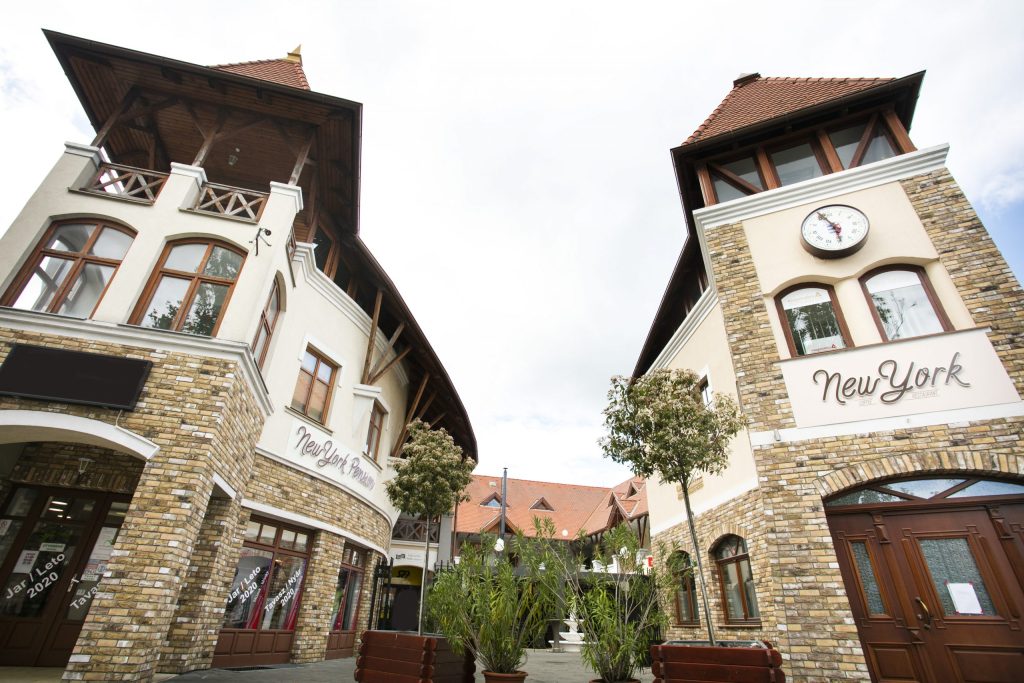
Dunajská Streda, located in the heart of Žitný ostrov, is the most important cultural, administrative, and economic center of the district. The first written mention of the town (under the name Syridahel) dates back to the reign of Béla IV, between 1255 and 1256. In the past, the town was also known as the “Little Jerusalem.” Our tour begins at the Market Square.
The village of Malé Dvorníky lies 3 km from Dunajská Streda. Records stored in the Budapest archives confirm that the village was already known in 1252 as a settlement of courtiers serving at Bratislava Castle. The village coat of arms (a hand holding a sword) also refers to its royal service. In 2013, the village was named Village of the Year in Slovakia. The Roman Catholic church was originally built as a chapel in 1735, and in the valley in front of the church there is a Lourdes Grotto. Equally beautiful is the village hall with its courtyard, which we also pass during our journey.
The Cséfalvay Water Mill in Dunajský Klátov is one of the last witnesses to the hundreds of water mills that once operated in the region. Visitors can find it in a picturesque setting on the banks of the Klátovské rameno. The mill was reconstructed in 1920 during renovations. It remained in operation until the 1940s. In the 1950s, after a new bridge was built, the water supply was diverted, making the millstone unusable due to lack of water. In 2016, the entire site underwent a complete restoration, including the construction of a viewing tower. From the wooden pier extending over the water, there is a perfect view of the mill itself.
After the water mill, we turn right and follow a field path to our next stop. Although Ohrady lies outside the area surrounded by the Klátovské rameno and the Little Danube, administratively it belongs to the small yet beautiful Ohrady-Solnoostrovsky majer, which stretches between the northern boundary of the village and Horné Mýto. The landscape is rich in flora and fauna, enchanting visitors. After crossing the estate bridge, we slowly enter the village of Ohrady, one of the villages of Žitný ostrov, whose origins date back to the period of the Hungarian conquest. The village church is very old—according to various sources, it already stood in 1138. Its bell was made in 1482 and is still in use today.
From Ohrady, the cycling route continues to Trhová Hradská, one of the largest villages in Žitný ostrov. In the past, a market road ran through here, which is reflected in the name of the village. A ferry once operated between Žitný ostrov and region Matúšova zem. In the center of the village stands the Roman Catholic Church of St. Anthony of Padua, which provides an impressive sight, surrounded by a beautiful park. Nearby, a restaurant and a patisserie welcome visitors with a wide selection of local treats.
Next on the route is Topoľníky. No matter from which direction visitors arrive, they will notice that the village is surrounded by water on all sides. This village, over 900 years old, offers many historical sites, a rich cultural life, and various sports opportunities for everyone. About 3 km east of the village lies the confluence of the Klátovské rameno and the Little Danube. These places, together with the typical willows and poplars of Žitný ostrov, invite visitors to relaxing walks and cycling tours. The village also has a thermal spa, whose high-quality thermal water helps alleviate various ailments.
From Topoľníky, the cycling route leads back to Veľké Dvorníky, located close to our starting point. The first written mention of the village dates back to 1252 under the name Vduarnok, in 1346 as Nogwduornuk, in 1786 as Nagy-Udvarnok, and since 1927 it has borne the current name Veľké Dvorníky. In the village center stands the Chapel of the Holy Trinity, built at the end of the 19th century. In 1953, a new Roman Catholic church was built, featuring an altar of the Virgin Mary dating from 1859. In the 17th century, a Renaissance manor was built here by a high-ranking official. The Kondé Manor was later demolished. According to legend, a tunnel once led from the manor underground all the way to the Yellow Castle in Dunajská Streda.