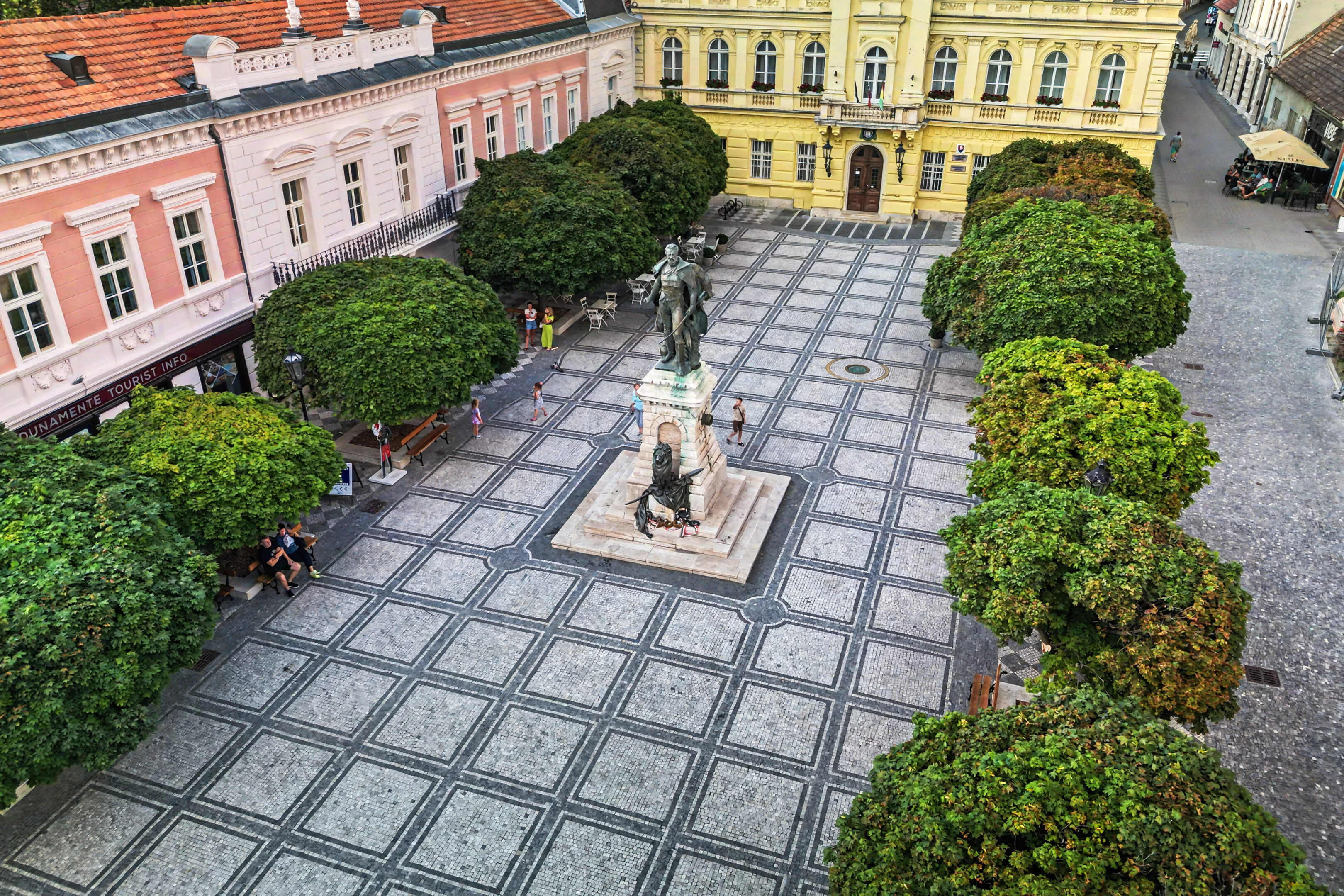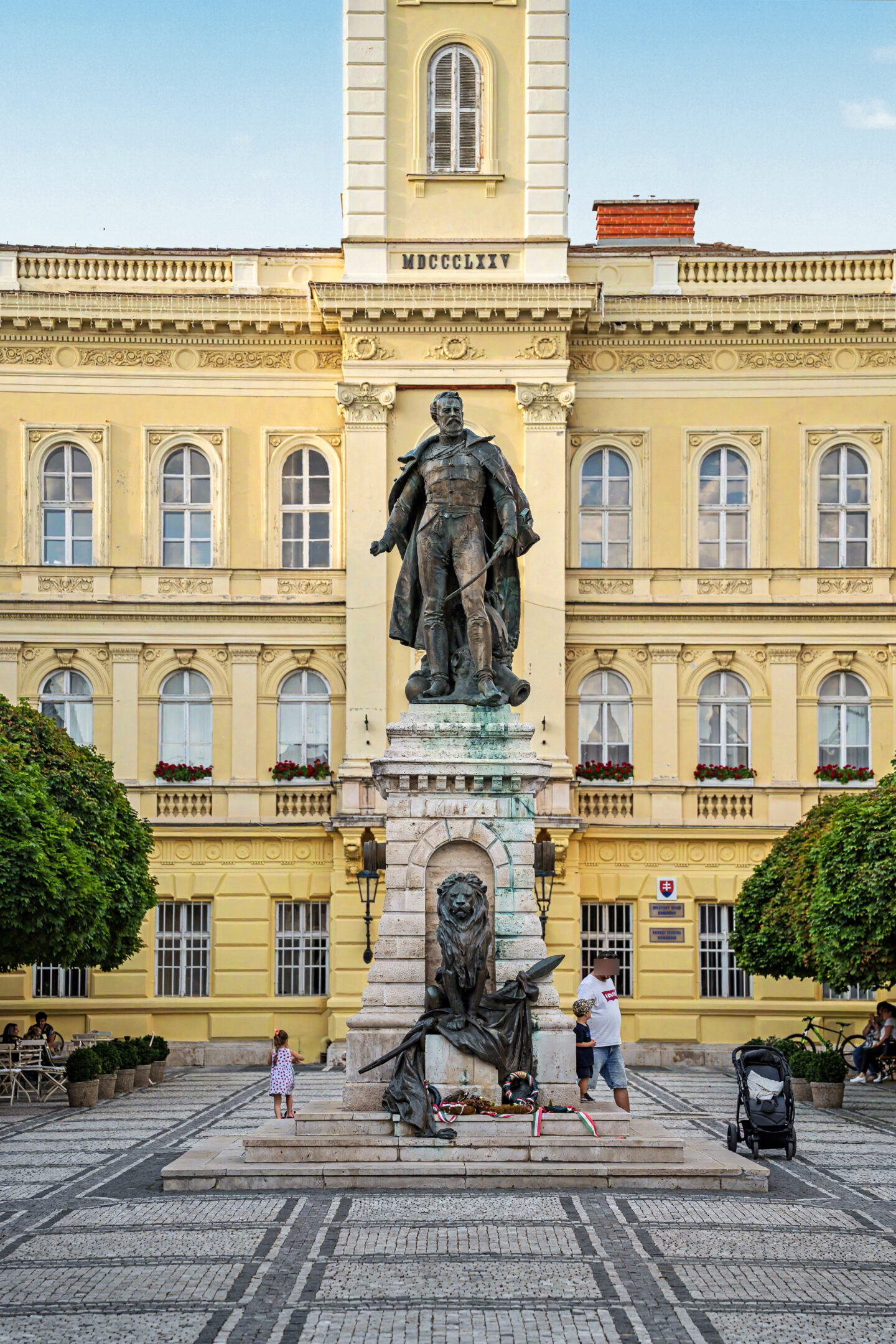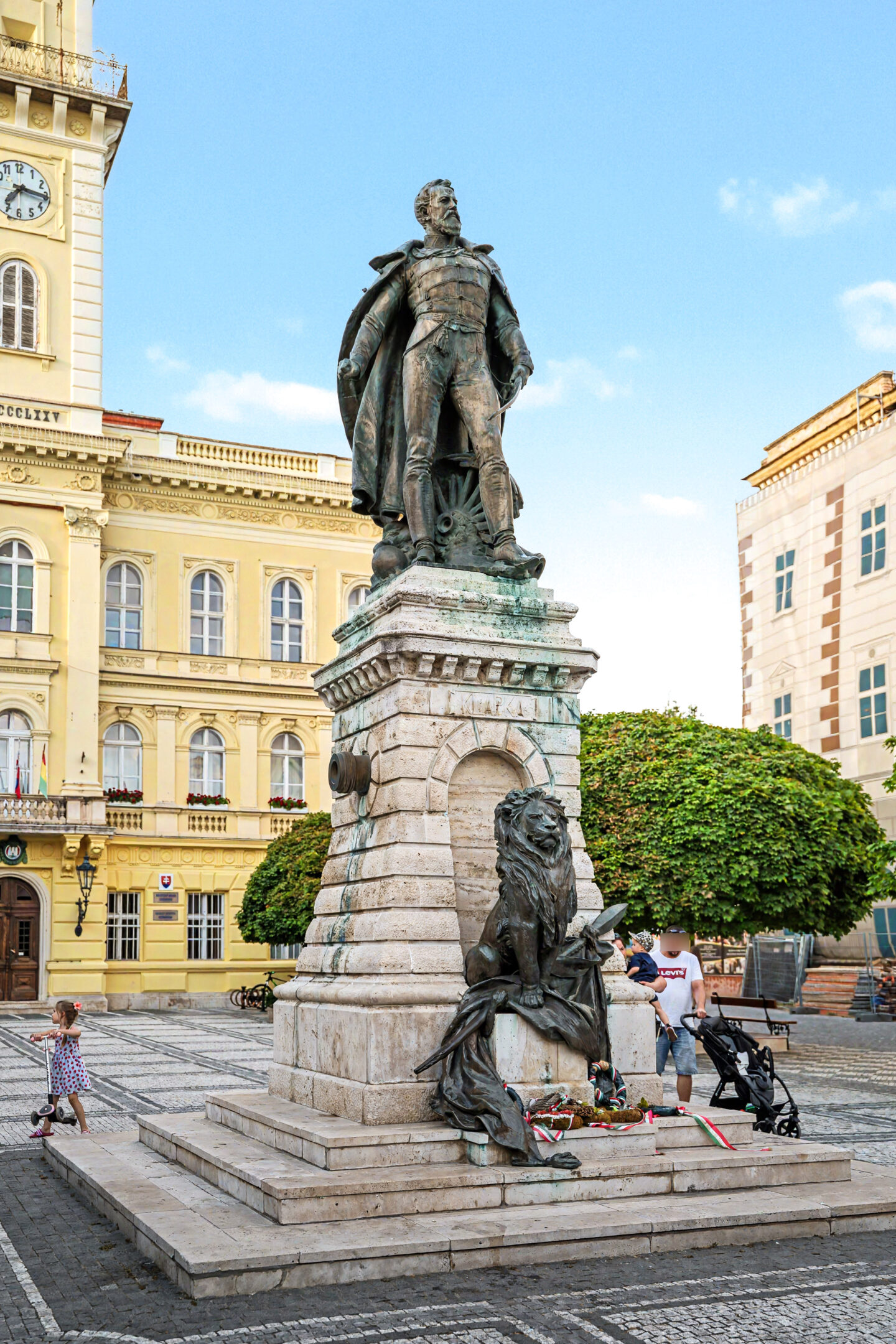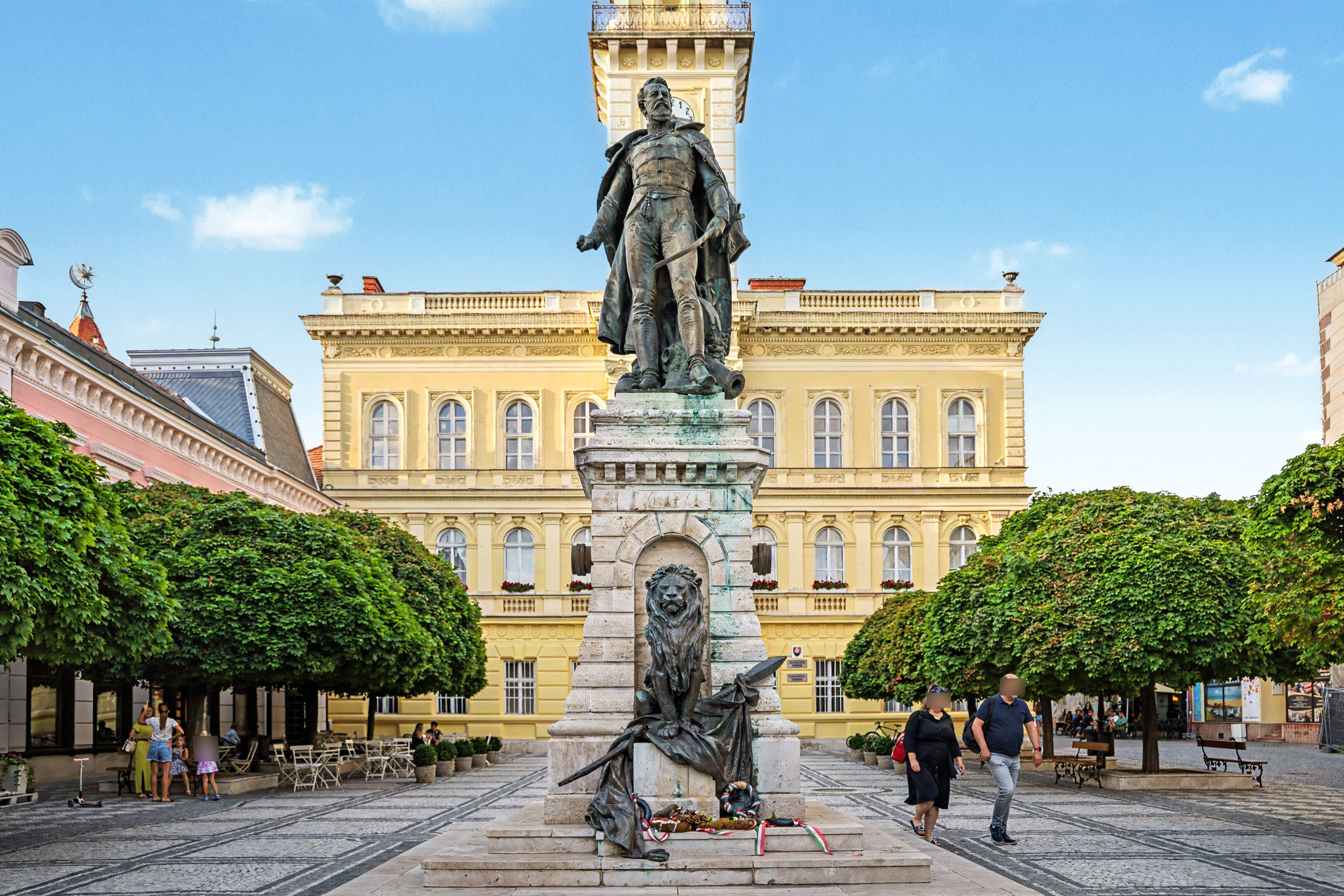


The present-day square was created on the site of a pond that remained in the deeper part of the water moat that previously protected the walls of the medieval town. A market was established where the pond had dried up. By the end of the 17th century, a building used for municipal council meetings stood on its northern side. In 1725, it was rebuilt and covered with tiles. After significant damage caused by an earthquake in 1763, it was restored in 1766 and the following year, a fire watchtower with a copper roof was added, on top of which was placed the symbol of the Habsburg monarchy, a double-headed eagle made of metal. Following a fire in 1848, the building was renovated again, but it had to be enlarged, so in 1875, an additional floor was added, and a new watchtower was constructed, resulting in the town hall as we know it today. This reconstruction is commemorated by the year in Roman numerals located under the tower. The building still serves as the seat of the municipal office. Since New Year’s Eve in 1999, a figure of a hussar from the years 1848/49 appears in the window of the tower between 10 AM and 4 PM in two-hour intervals, accompanied by the Klapka March, composed by the conductor of the local garrison’s music, Béni Egressy, after the last victorious battle of the fortress defenders in August 1849.
Statues and Monuments:
Galéria