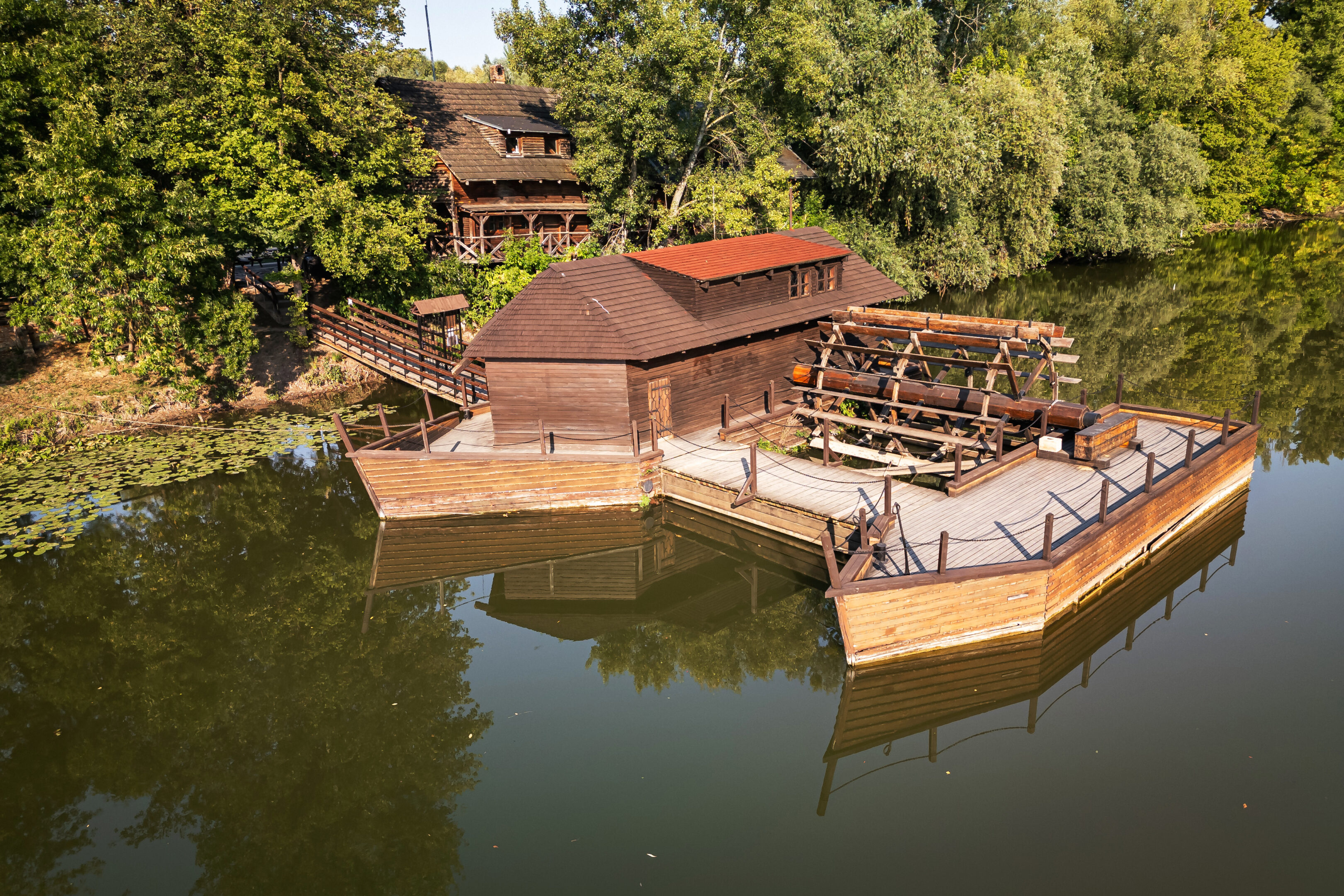


The floating mill in Kolárovo, located in southwestern Slovakia, is the last remaining example of a floating mill and the only one of its kind in the country. It houses the Museum of Water Milling.
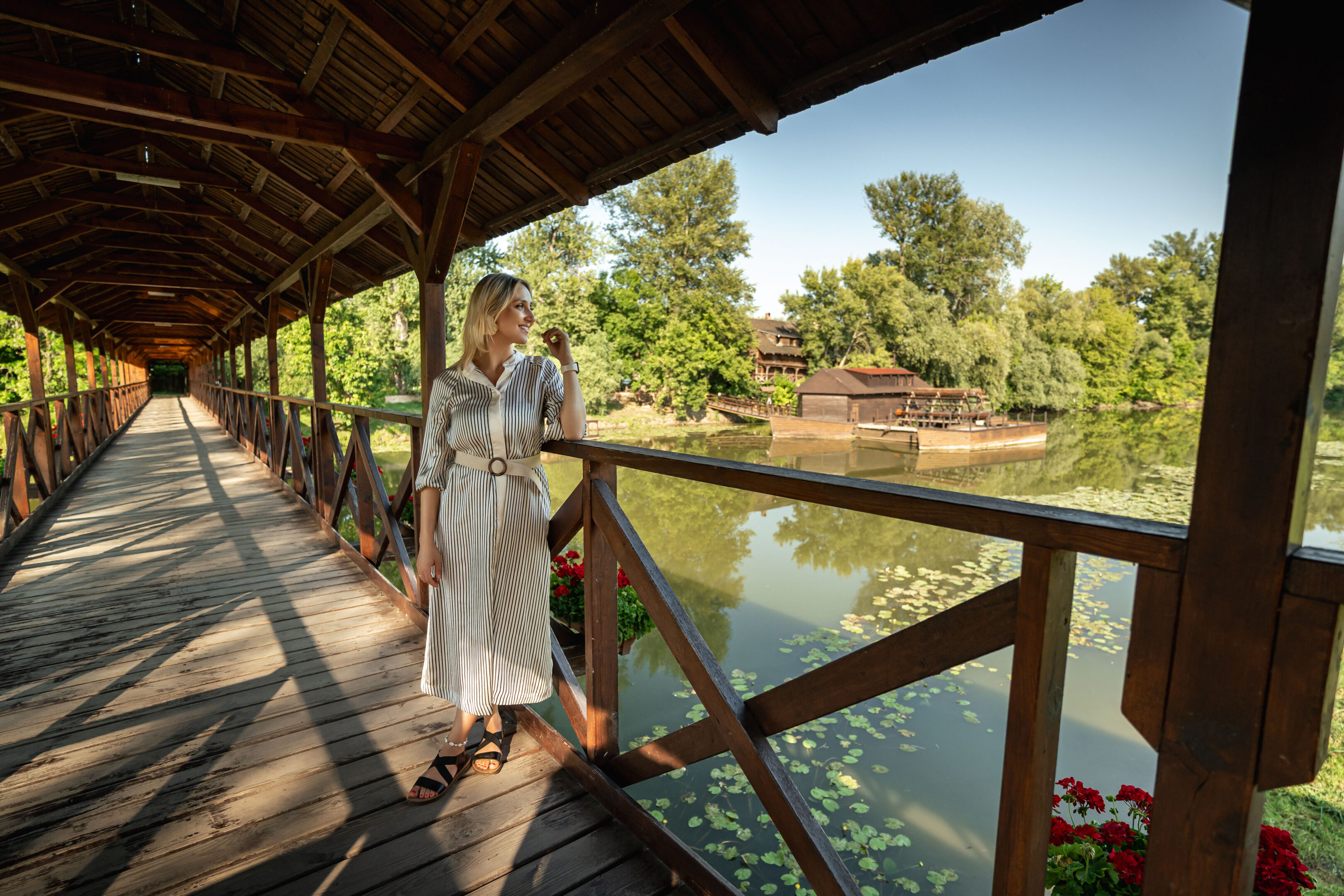
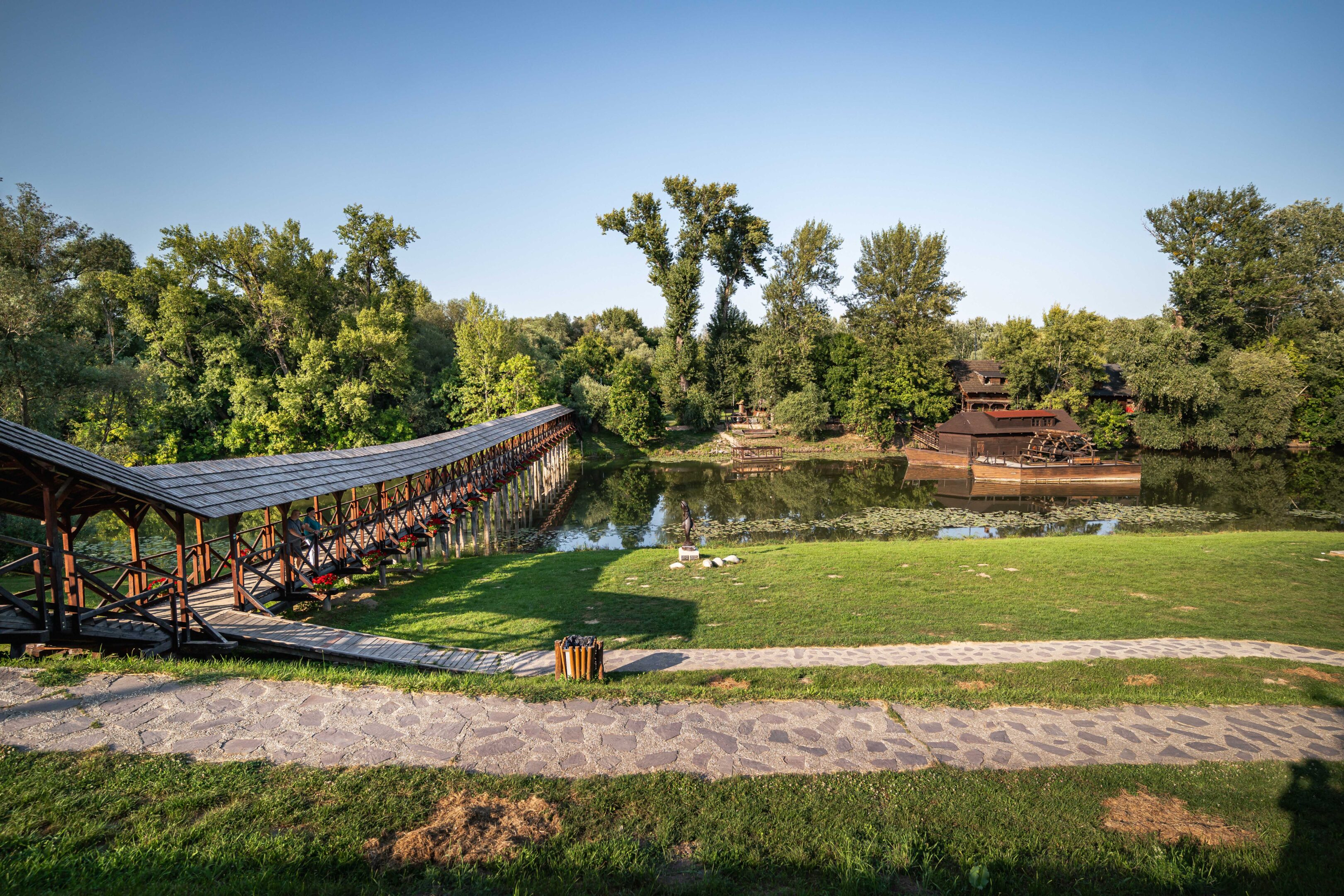
The mill is situated on a dead arm of the Danube, built on two parallel boats and anchored to the riverbank. The boats are larger than those used in original floating mills. This is a reconstructed version, built in 1982 at the Slovak Shipyards in Komárno, modeled after the former floating mill in Radvaň nad Dunajom.
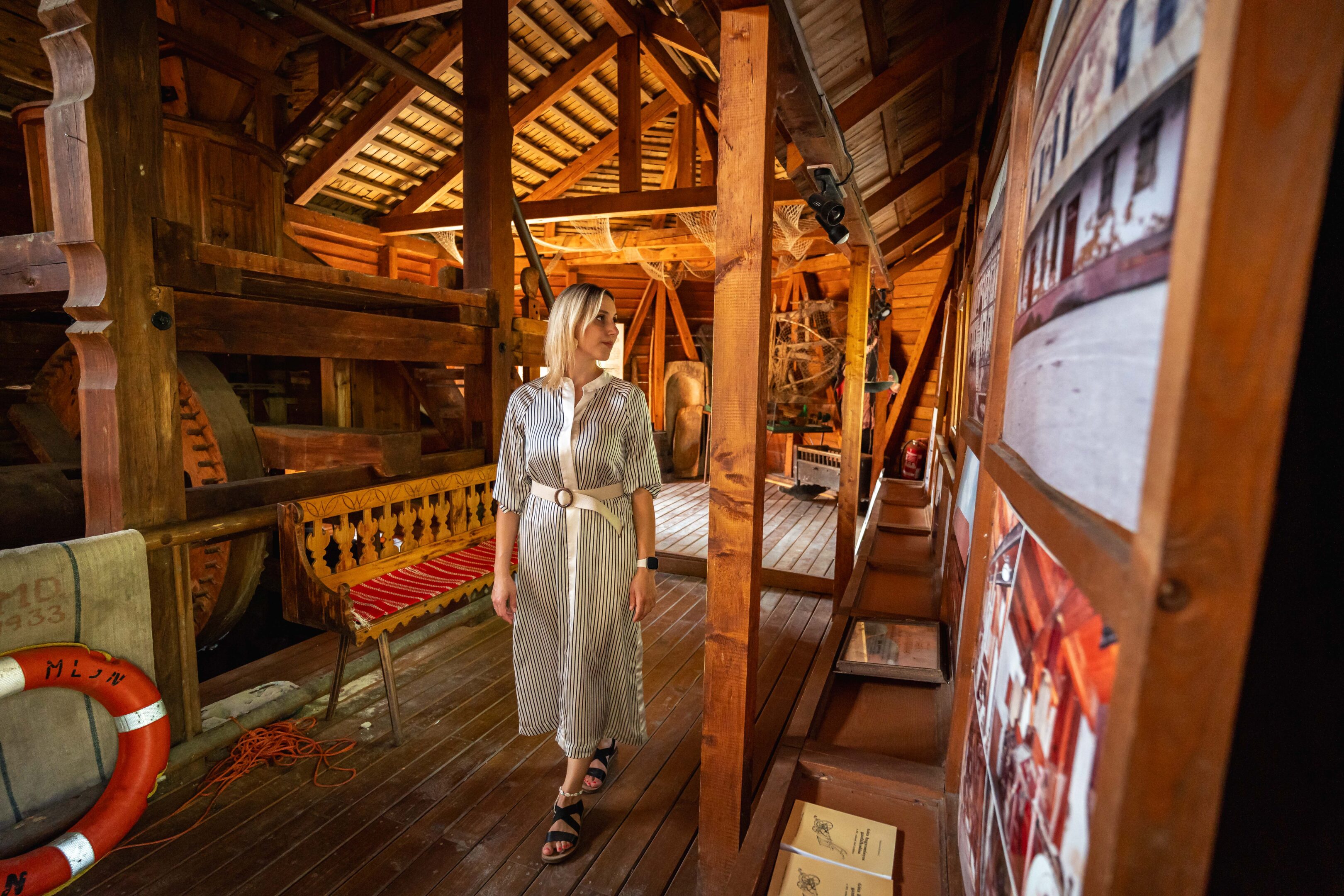
Although the mill is theoretically functional, it is not operational due to the stagnant water of the dead arm. Inside, visitors can find original components from the historic mill, and the structure now serves as a small historical exhibition. A notable feature is a gasoline-powered generator from the turn of the 19th and 20th centuries, resembling a miniature locomotive, reportedly one of the world’s first machines used for producing fishing nets.
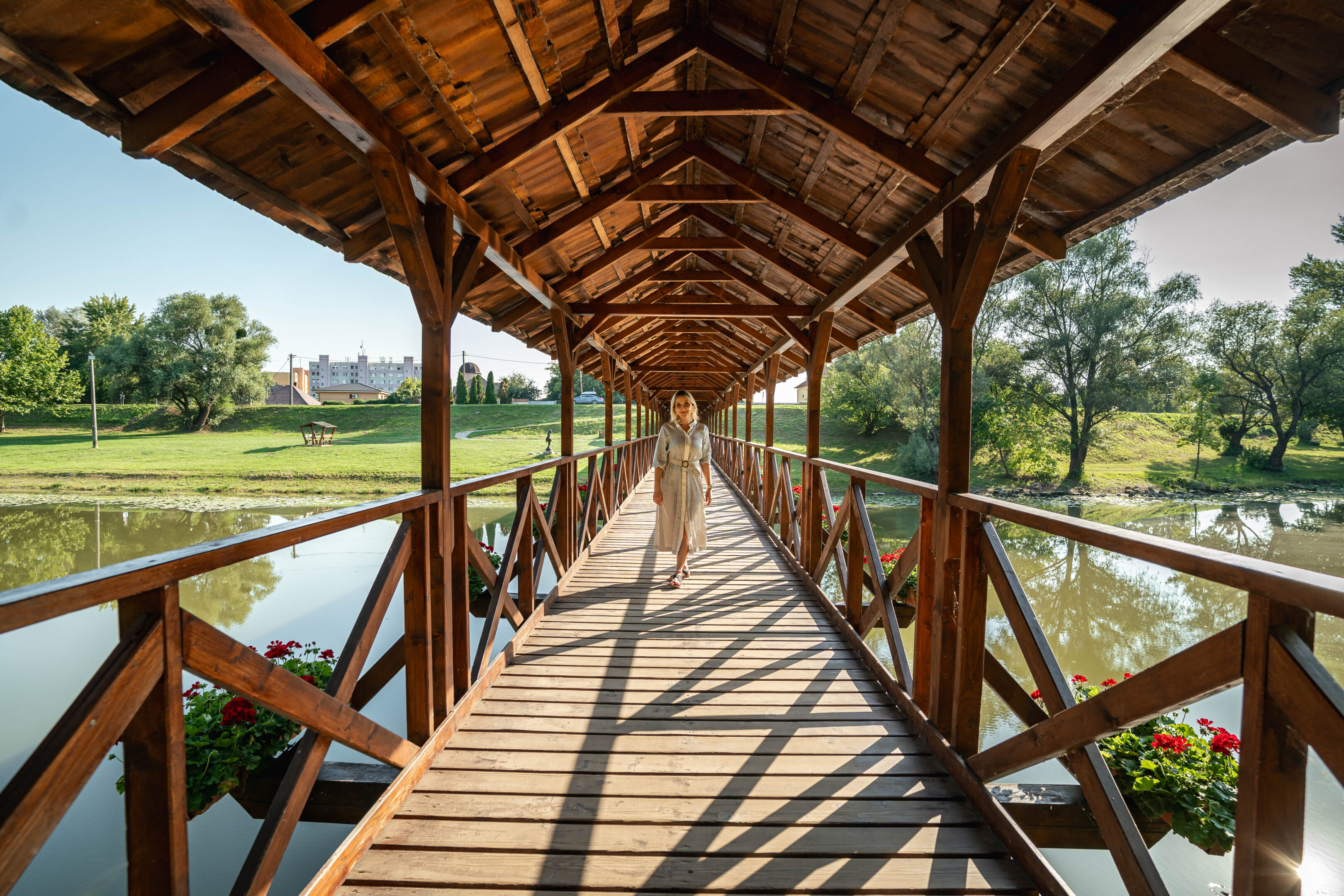
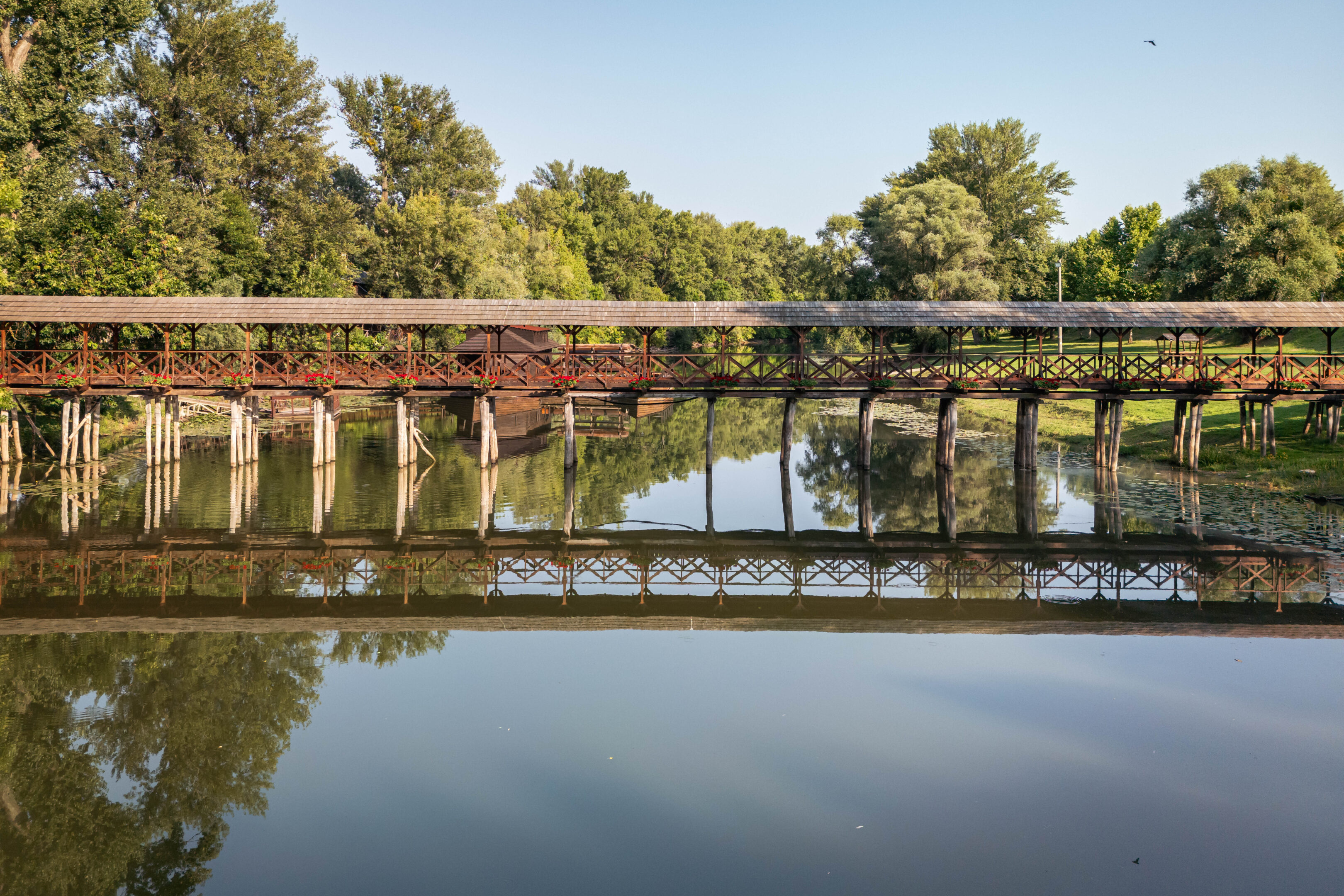
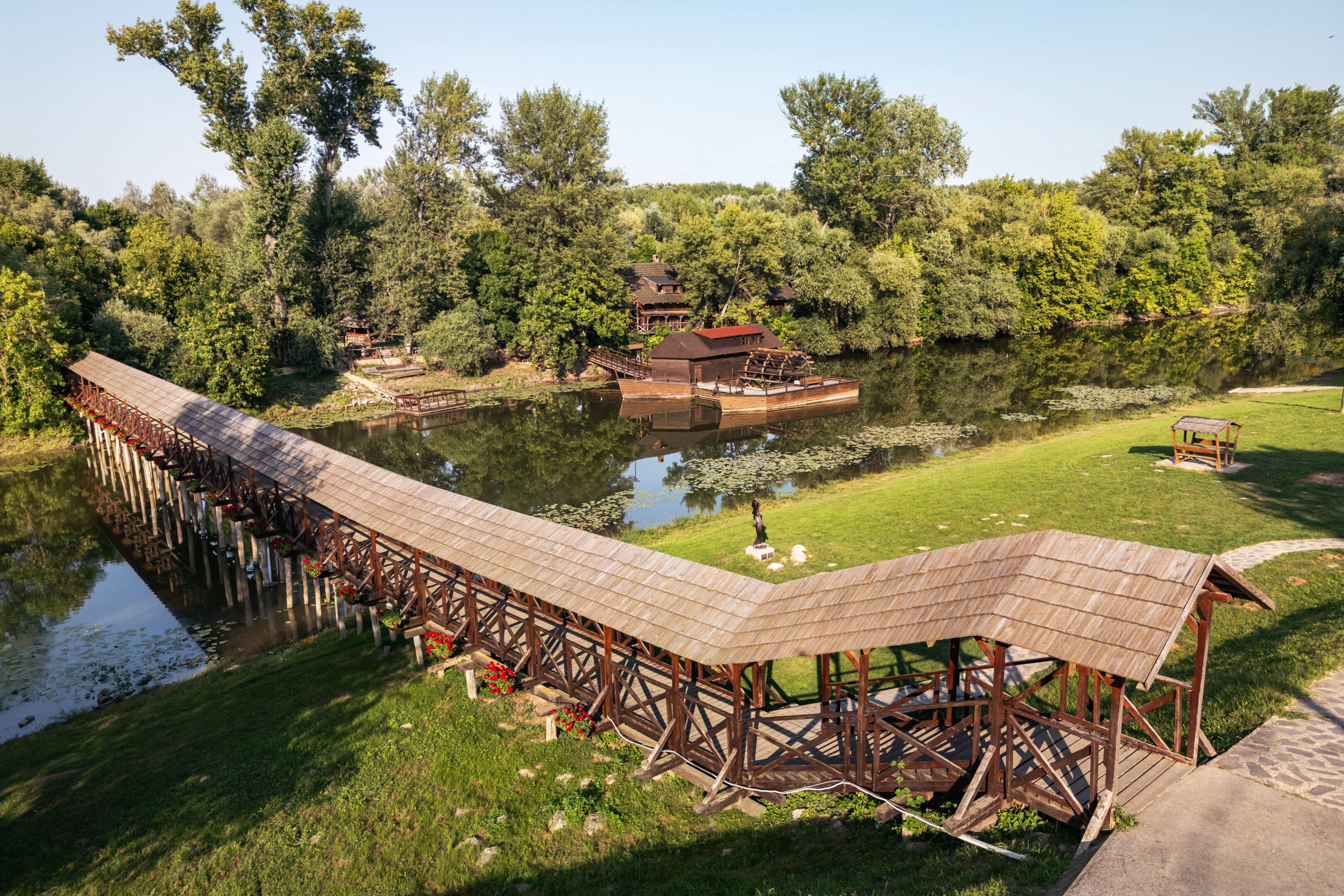
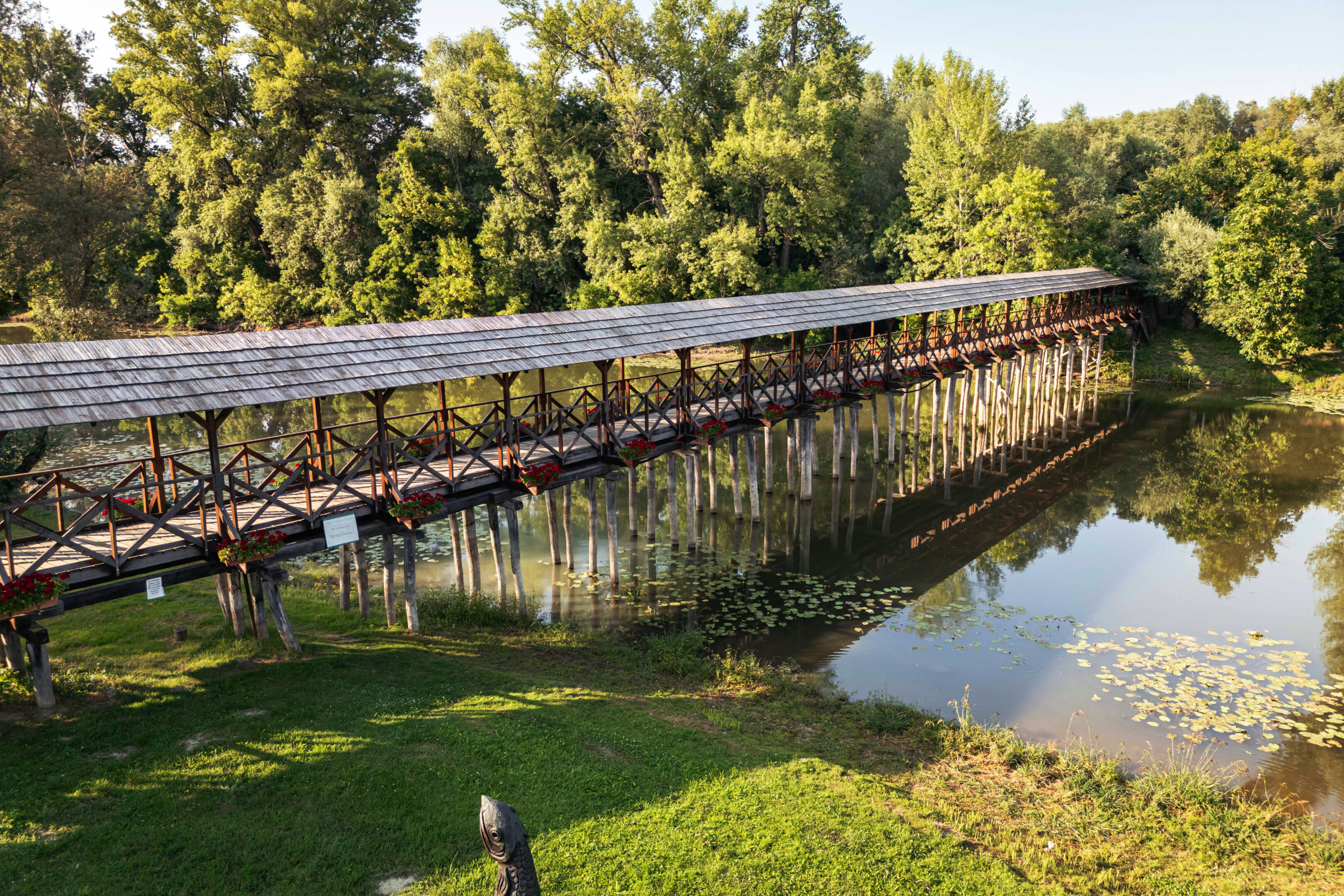
The mill was built with a strong structure to withstand spring ice and even hundred-year floods. It is accessible via an 86-meter-long wooden bridge, considered the longest of its kind in Europe. The mill lies on a popular kayaking route along the Little Danube, but due to blockages on both sides, it is not accessible by water.
At the entrance to the site, there is a small technical museum, featuring highlights such as a transmission-powered engine used to drive net-weaving machines. After nearly 50 years, the machine was restored to working condition and is occasionally demonstrated during special events.
The mill is part of a larger complex with several technical monuments, resting areas, and the traditional “Krčma u Mlyna”, known for its unique selection of herbal liqueurs. During the summer season, numerous cultural and gastronomic events are held here, along with eco-camps for school groups.
Galéria