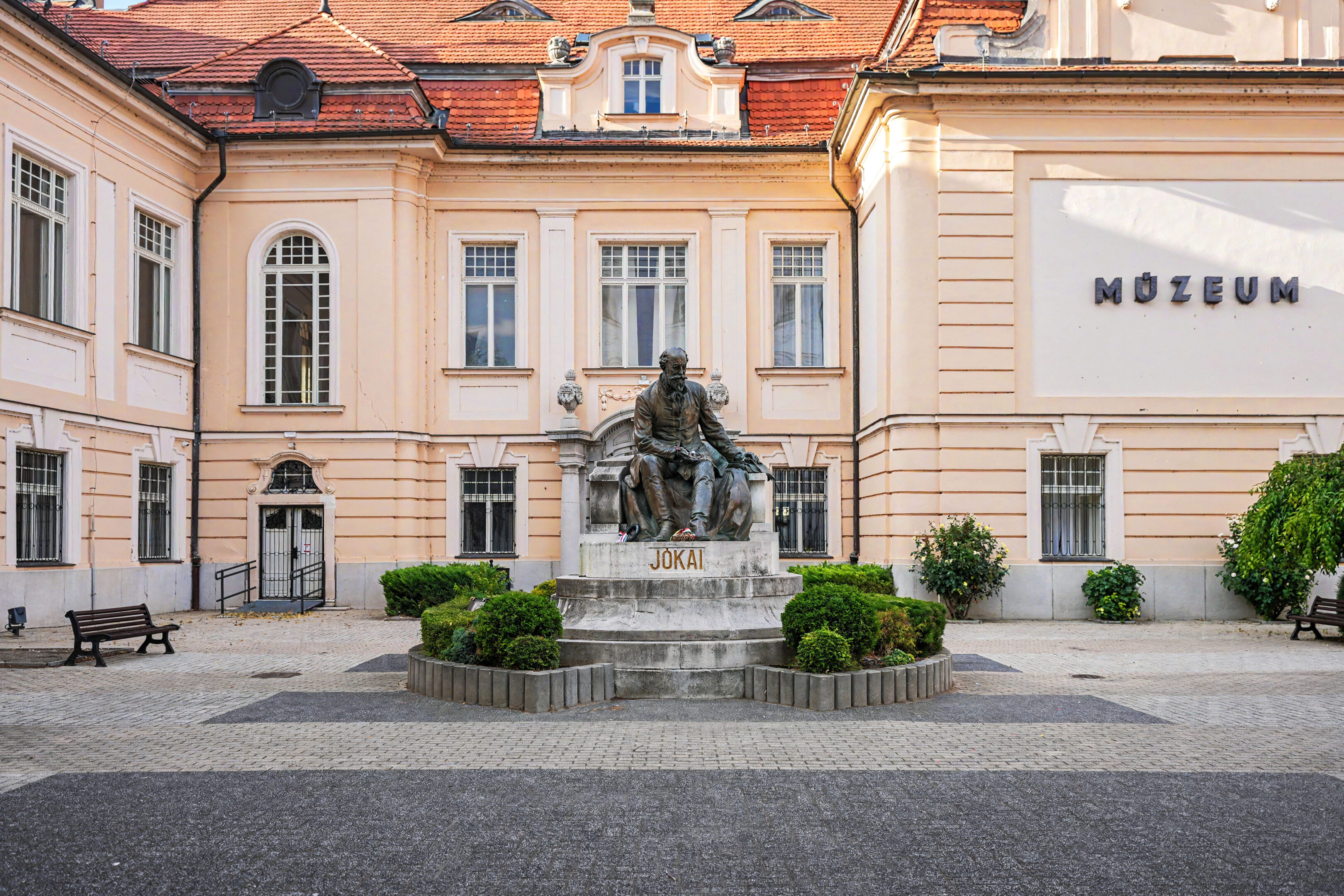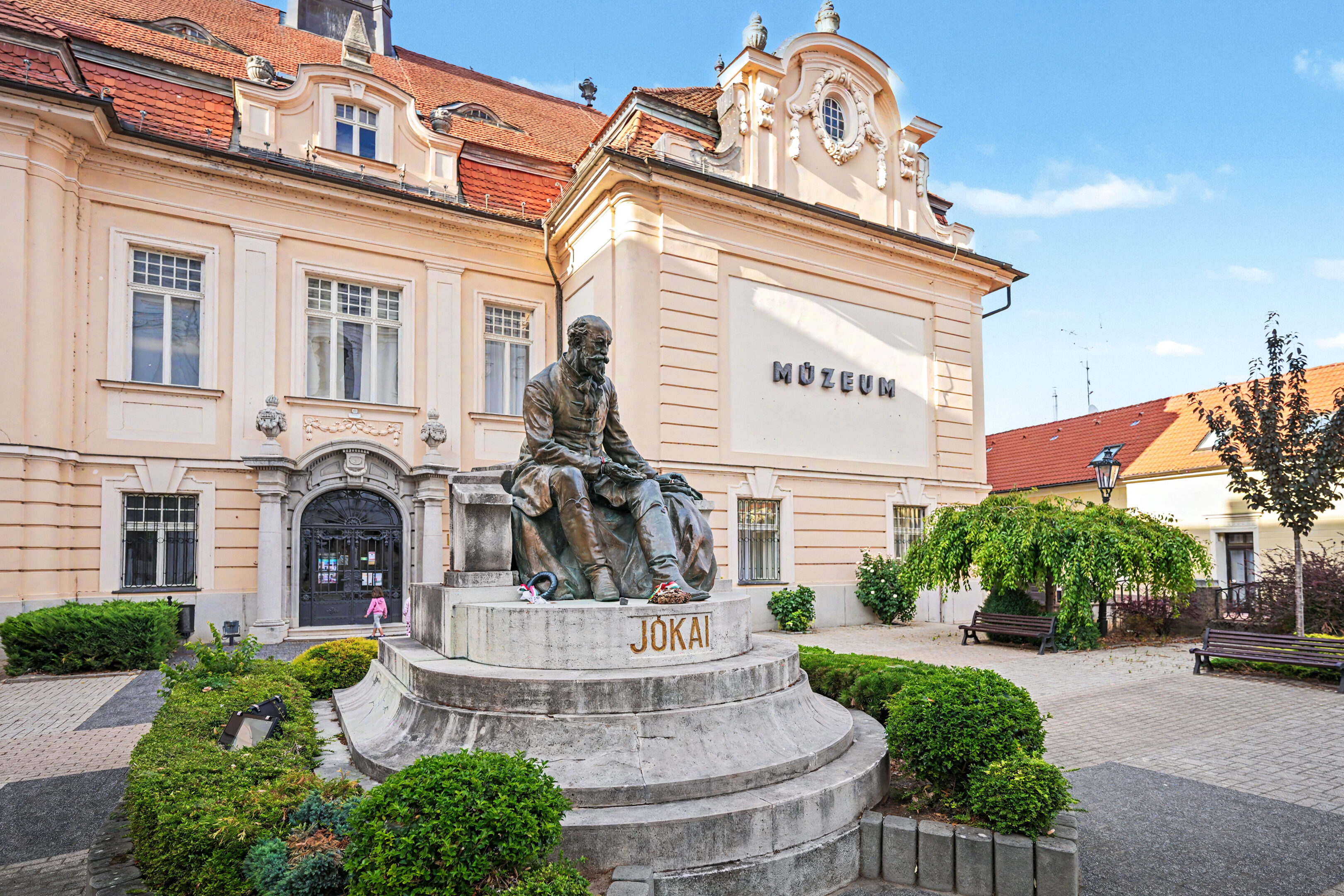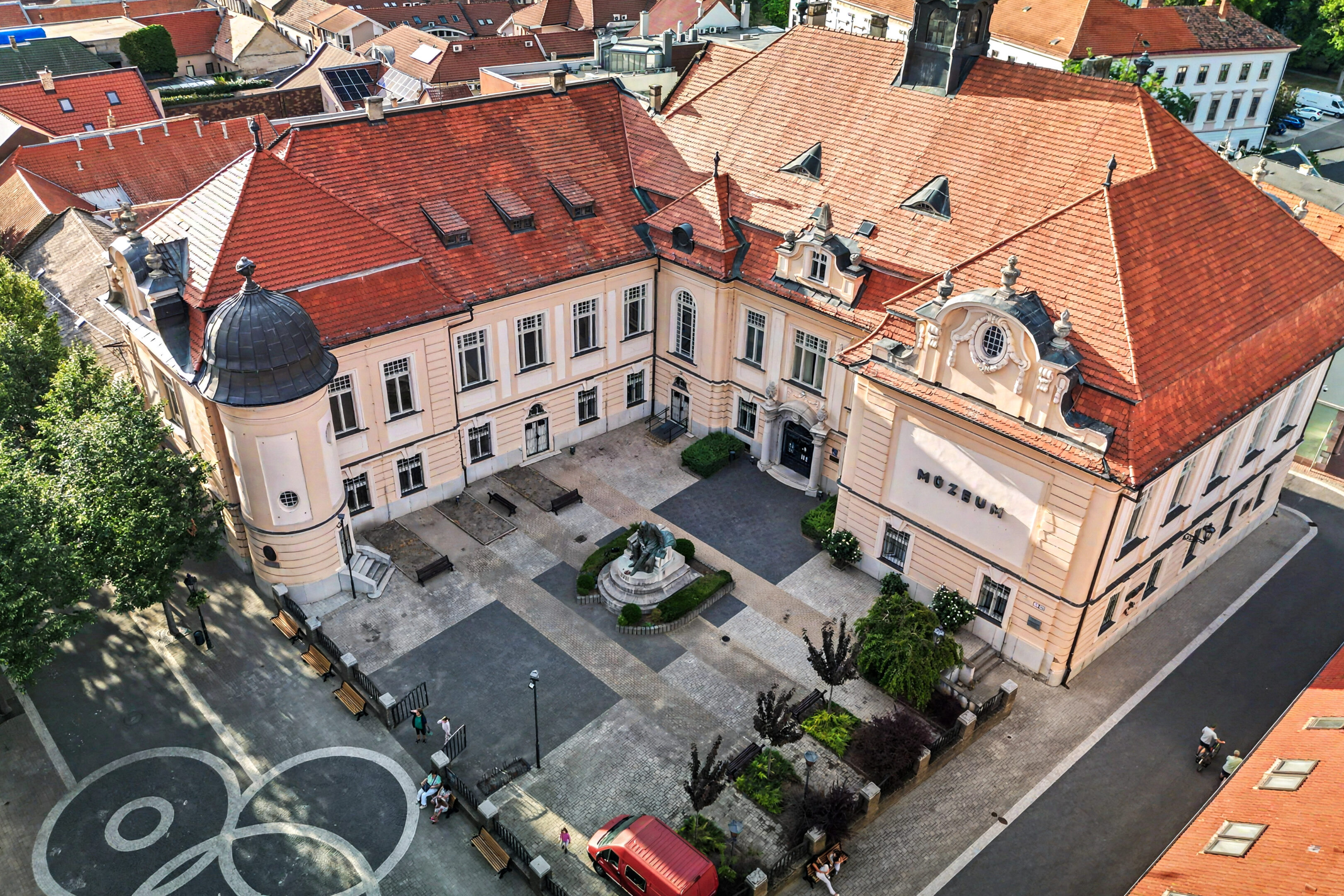



The main building of the Podunajské Museum is located on Palatínová Street in the Cultural Palace built in 1913. It is one of the most important centers of Hungarian culture in Slovakia and boasts the richest Roman collection, as well as collections of folk costumes, textiles, and ceramics. The collection features characteristic elements of folk costumes, primarily from the Hungarian ethnicity. Noteworthy items also document Danube fishing, gold panning, and the life and work of wagon-driving farmers from Komárno.
One of the prominent walls of the museum’s representative hall is adorned with a large oil painting by the Hungarian realist painter Árpád Feszty (1856–1914), titled The Battle of Bánhida, painted in 1897-98. On the opposite wall is an exceptionally valuable Baroque cityscape painting by Károly Friedl, depicting the great earthquake in Komárno in 1763. In addition to these two dominant paintings, the walls of the representative hall are decorated with portraits of historical figures.
Permanent Exhibitions of the Museum Include:
Currently, its primary mission is to purposefully gather, evaluate scientifically, manage professionally, and protect, as well as to utilize scientifically and culturally educationally, both material and intangible evidence and documents concerning the development and current state of society in the Komárno district, as well as the evolution of nature in the southern part of the Danube Plain in the districts of Komárno and Nové Zámky. Within its specialization, the museum focuses on the history, ethnography, and cultural history of the Hungarian national minority, as well as the research and documentation of interethnic relations in the Nitra Self-Governing Region and the research and documentation of Roman monuments in the Komárno district.
Galéria